Feb 5, 2026
Week 16 – Freshwater Logic and Sectional Clarity
Refining the water system from tidal spectacle to controlled freshwater ecology, and learning that section drawings are where design decisions are truly tested.
Technical
Flow
Moving from plan-based ambition to sectional verification.
This week Duncan emphasised the need to produce detailed sections through the key highlighted areas of the site. While the masterplan communicates spatial intention, it is only through section that relationships between ground, structure, water and ecology can be properly tested. He identified specific moments where boardwalk height, ground build-up and water interfaces require clearer articulation. These sections will need to demonstrate gradient, retaining strategies, drainage routes and structural support conditions. The shift toward sectional clarity reinforces that feasibility and environmental logic must underpin spatial ambition.
Hydrology
Reframing the site as a freshwater system rather than a tidal extension.
A significant refinement concerned the hydrological strategy. Duncan advised against a partially tidal system, as this would introduce saline conditions and fundamentally alter the ecological potential of the site. A saltwater regime would constrain planting palettes and aquatic life, reducing biodiversity options and complicating long-term maintenance. Instead, we agreed the site should operate as a freshwater system, filled primarily through rainfall capture and controlled river intake where necessary.
Under this revised logic, the water body retains freshwater character. Once levels exceed a predetermined threshold, excess water would drain back into the Thames via an overflow outlet. This approach maintains ecological stability while still acknowledging the river’s presence. It also simplifies species selection and strengthens the viability of wetland and reedbed habitats.
For the built streetscape zones, Duncan suggested introducing two substantial rain gardens, positioned strategically to intercept runoff from hard surfaces. These gardens could connect hydrologically to the wider water system, functioning as both filtration infrastructure and visible ecological intervention within the urban edge.
Circulation
Testing alignment, adjacency and programme at the edges.
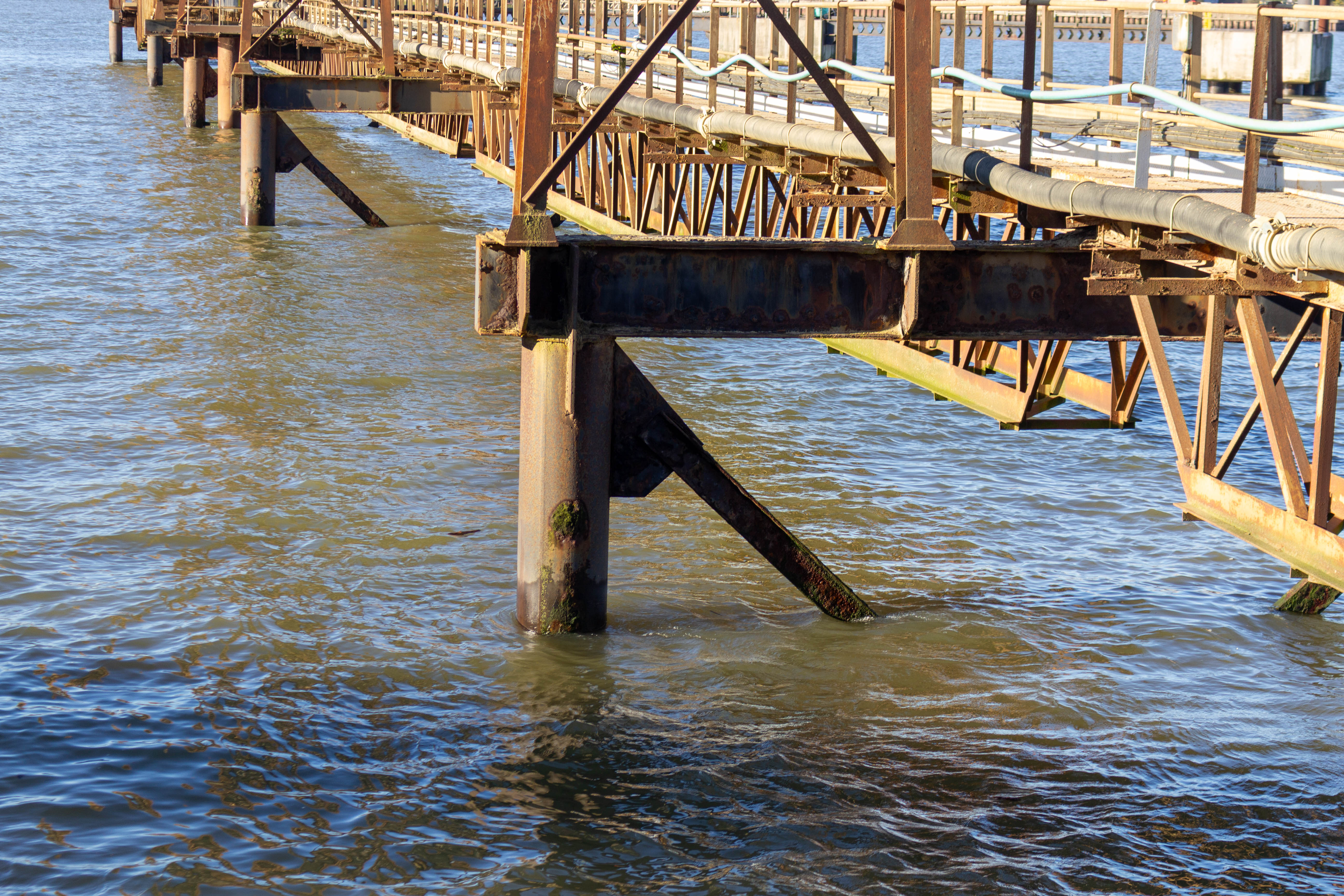
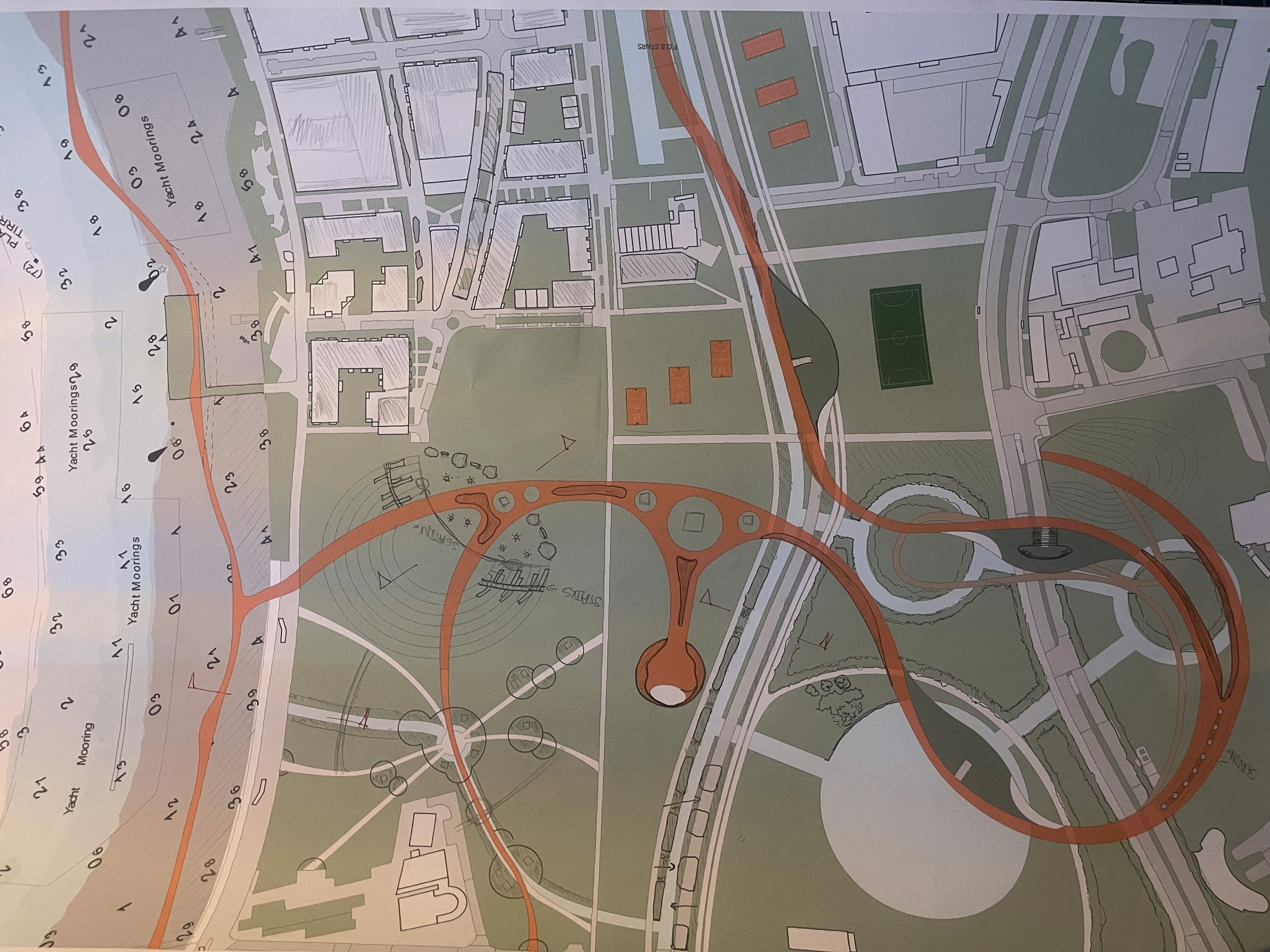
We revisited the waterfront alignment of the boardwalk. Rather than forcing it through the jetty structure, Duncan suggested allowing it to run alongside and connect laterally. This would preserve the integrity of the jetty while maintaining circulation continuity. The adjustment reinforces the idea that the boardwalk should respond to existing infrastructure rather than dominate it.
Within the sports park, he proposed the addition of paddle courts, recognising their growing popularity and compact spatial footprint. We also discussed the possibility of replacing the football pitch with a skate-oriented landscape. This would alter the spatial language of the zone, shifting from formal field geometry to a more sculpted and topographical terrain. The decision remains open, but the conversation reinforced that programme selection directly influences section, drainage and material strategy.
Reflection
This week narrowed the project’s technical direction. Removing tidal influence clarified ecological intent and strengthened the freshwater narrative. The call for sectional drawings marked an important progression from diagrammatic thinking toward structural and hydrological accountability. The design is becoming less speculative and more resolved, shaped increasingly by environmental logic and measurable relationships rather than formal ambition alone.