Jan 29, 2026
Week 15 – Public Space, Structure and Hydrological Continuity
Resolving how elevated structure, circulation and hydrology operate as one coordinated system rather than isolated design gestures.
Technical
Flow
Converting structural infrastructure into inhabitable public realm.
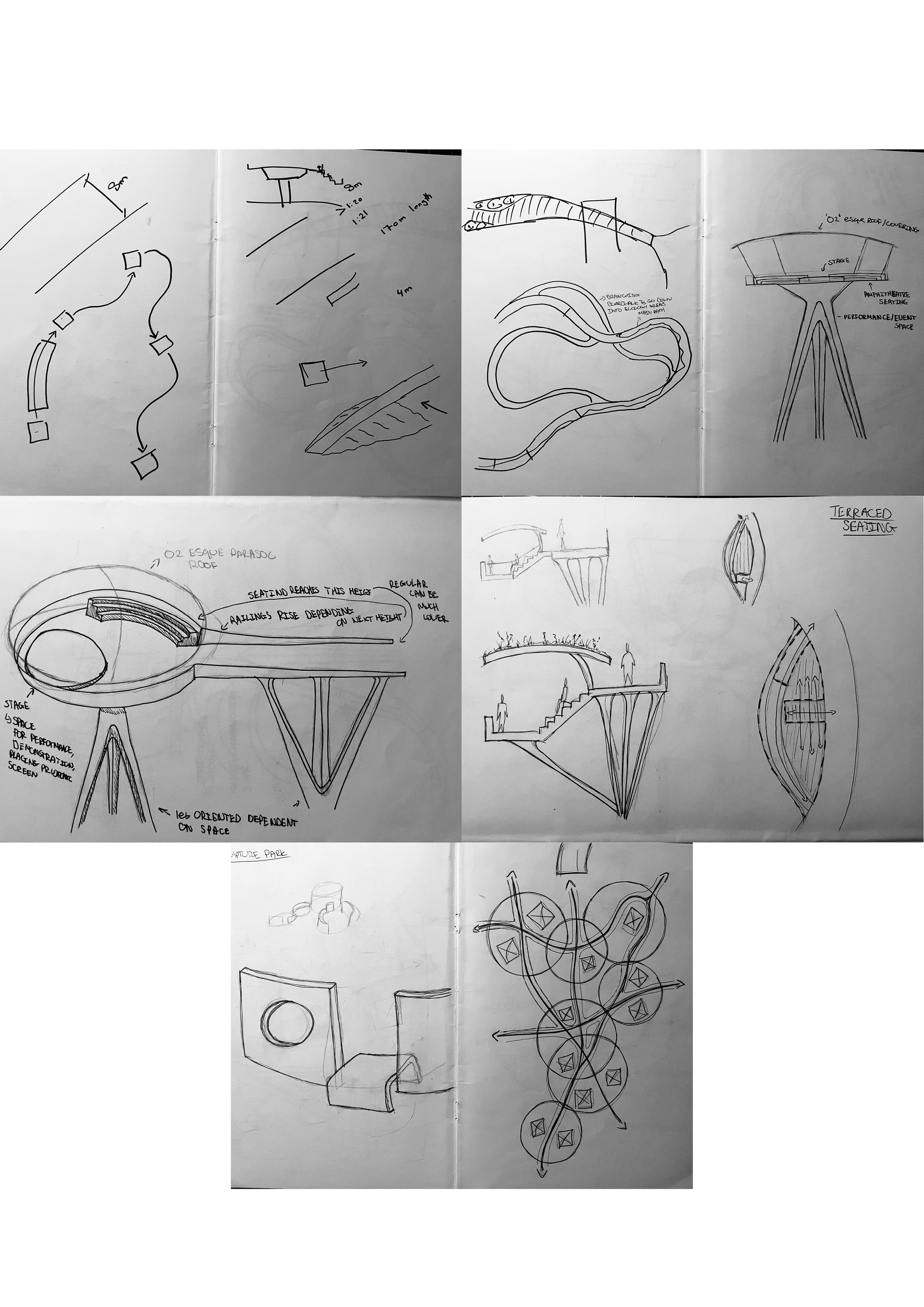
In discussion with Duncan, I presented the revised strategy for integrating the boardwalk more directly with the ground plane. Rather than remaining a purely elevated circulation device, the boardwalk is now conceived as a large-scale public platform capable of supporting stalls, programmed activity and informal gathering. At widths of eight to twenty metres, its scale necessitates this shift in function. Structurally, this means reconsidering load assumptions, introducing areas of increased point load capacity for market infrastructure and ensuring that balustrades, edges and services can accommodate intensified occupation.
We also reviewed sketches of terraced seating extending from the boardwalk edge, overlooking ecological zones below. These terraces would cantilever or step down from the main structure, requiring careful consideration of structural support, drainage and safety. The intent is to provide visual permeability across the ecological spaces without encouraging physical intrusion, maintaining habitat integrity while enhancing observation.
Form
Reassessing the sculpture park through circulation, comfort and perceived safety.
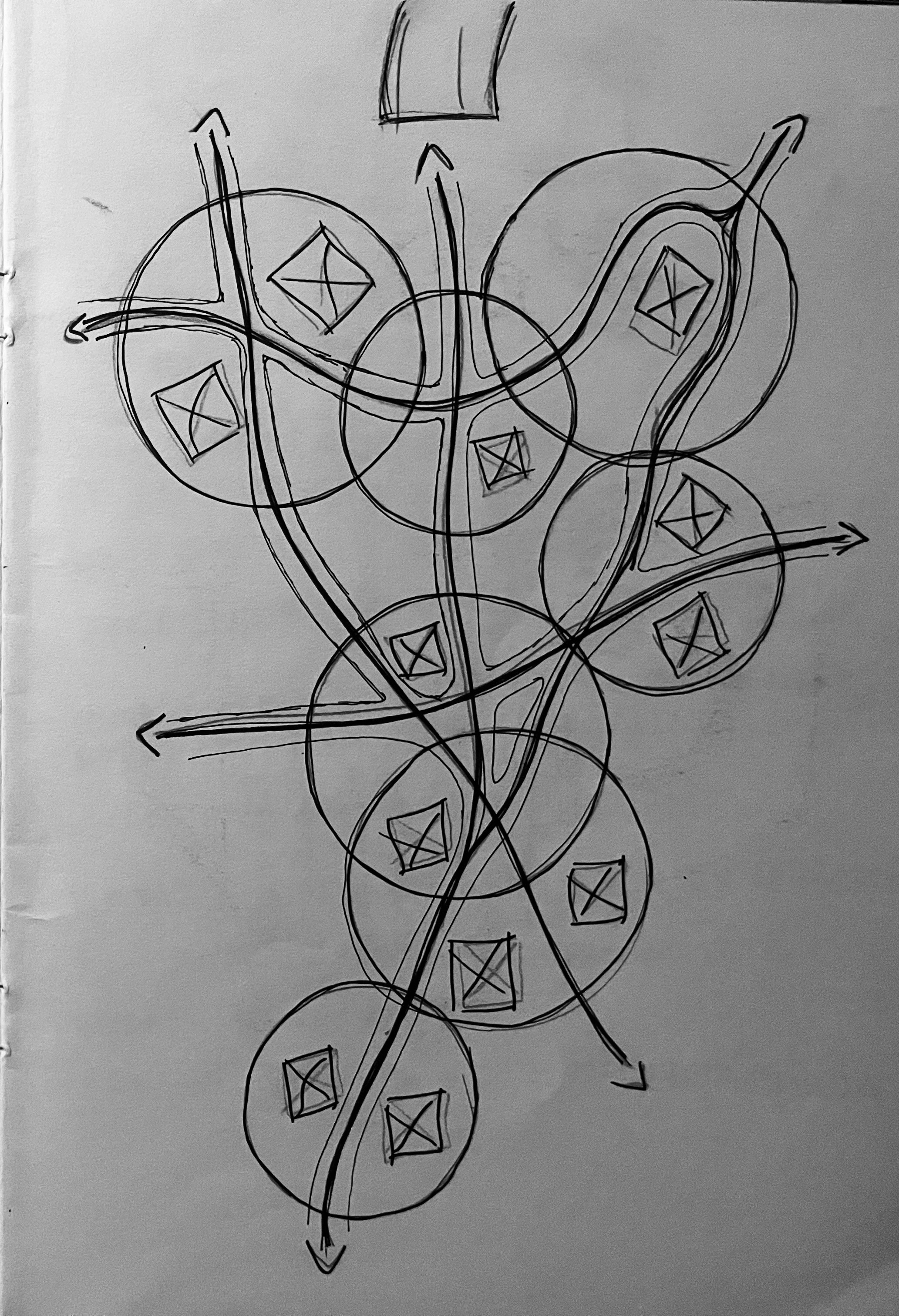
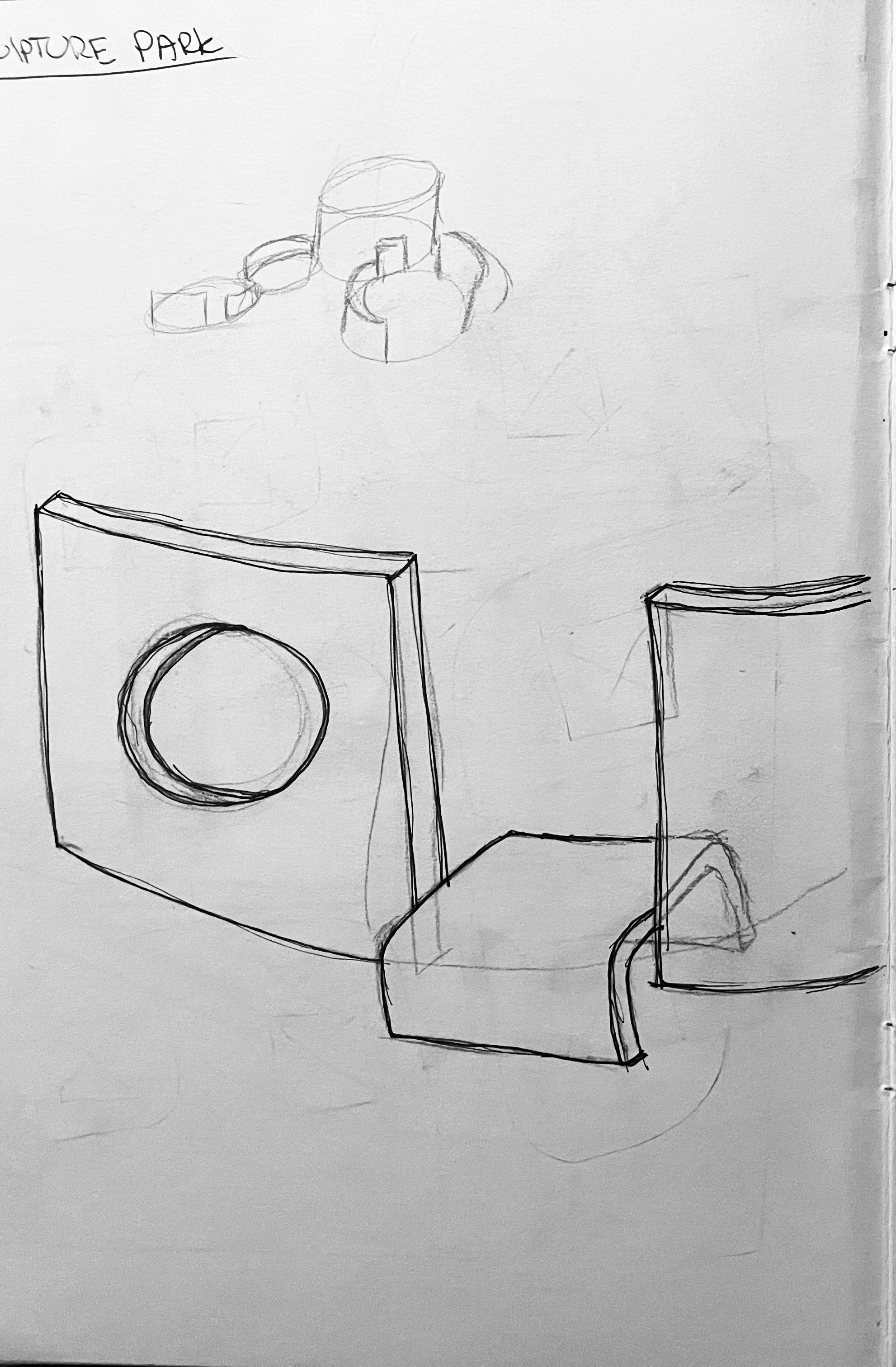
A significant portion of the session focused on the sculpture park, a large grey zone in plan that lacked formal clarity. While the circular logic of earlier iterations provided coherence, feedback highlighted potential concerns around enclosure and perceived safety. Peter encouraged me to evaluate the space from the perspective of unfamiliar users, considering wall heights, visibility lines and the treatment of voids. This introduced the importance of passive surveillance, permeability and human scale within sculptural landscapes.
We discussed breaking away from strictly circular forms, allowing variation in geometry to improve sightlines and circulation flow. Wall heights may need modulation, lowering in some areas to improve visibility while maintaining moments of enclosure elsewhere. This reframed the sculpture park not as a singular object but as a sequence of spatial conditions that must balance intrigue with comfort.
Continuity
Completing the water cycle through ground-level intervention.
Duncan proposed that instead of leaving void spaces within the sculpture park as planted ground, some could hold shallow water at grade. This would create the perception that paths and sculptural elements are floating, reinforcing the site-wide hydrological narrative. Technically, this introduces an additional outlet within this portion of the site, allowing water to circulate back into the broader system. The shallow basins would need controlled depths, gentle edge detailing and appropriate lining systems to prevent leakage while supporting aquatic planting where feasible.
This move strengthens the cyclical logic of water across the site. Rather than ending at the reed beds or canal line, water becomes a recurring spatial condition, appearing in ecological zones, under the boardwalk and within the sculpture park. The design thus shifts from isolated water features to an integrated hydrological framework.
Reflection
This week clarified that structural ambition must be matched with spatial responsibility. The boardwalk cannot simply be large; it must justify its scale through programme and technical rigour. Similarly, the sculpture park cannot rely on form alone but must account for circulation, comfort and perception. The introduction of water into this zone reinforces the importance of continuity, ensuring that structure, art and hydrology operate as one coordinated system rather than separate layers.
