
Dec 11, 2025
Week 12 - Permeable Ground, Managed Flow
When surfaces begin to absorb rather than resist, landscapes shift from deflection to stewardship, turning pavements into part of the hydrological system.
Technical
Flow
Understanding permeable modular pavements as layered systems rather than surface finishes.
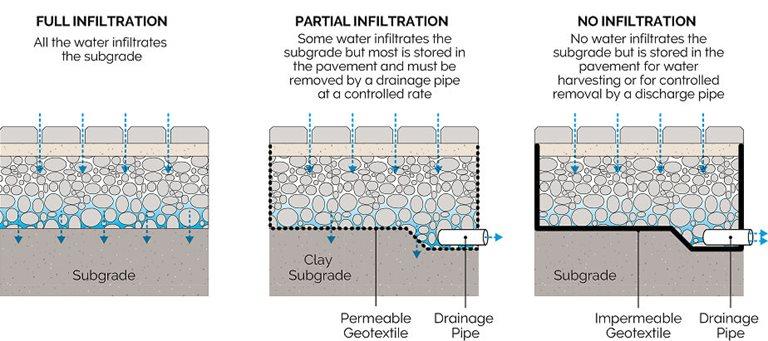
The session began with a technical definition of permeable modular pavements, framed as multi-layered construction systems designed to enable infiltration, storage and controlled discharge of surface water. Steven Burton presented the standard anatomy of a permeable pavement, comprising surface units, permeable jointing, a bedding layer, an open-graded sub-base and a formation layer capable of temporary water storage. Emphasis was placed on the role of the sub-base as a structural and hydrological component, often formed from open-graded crushed stone with high void ratios, typically around 30–40 percent, allowing attenuation within the pavement build-up.
We distinguished between unbound and bound construction methods. Unbound permeable paving typically consists of concrete blocks or stone setts laid with 2–6 mm angular aggregate within approximately 8 mm wide joints, enabling vertical infiltration through the joints rather than the paving units themselves. Angular aggregates are critical here, as their interlock prevents migration and maintains permeability under trafficking. Bound construction, by contrast, relies on rigid or semi-rigid jointing systems such as permeable resin or mortar, which bind units together to increase load distribution and resistance to shear. While bound systems offer improved structural stability, particularly for vehicular loading, their permeability depends on the porosity of the binder and the continuity of drainage layers beneath, making detailing and specification critical.
Performance
Balancing permeability, strength and appearance in modular paving systems.
Concrete block paving was examined in relation to its widespread use across highways and public realm projects, driven by its high compressive strength, dimensional consistency and predictable manufacturing tolerances. The concrete block industry plays a significant role in paving supply chains, offering standardised solutions that can meet both structural and drainage requirements when correctly specified. However, the permeability of concrete block systems is not inherent to the blocks themselves but is instead governed by joint width, joint fill material and sub-base permeability.
Case studies demonstrated how permeability rates can be significantly increased by modifying joint design. At Bromley Plaza, joint widths were increased to approximately 20 mm, allowing higher infiltration rates and greater tolerance during extreme rainfall events. This approach improves hydraulic performance but introduces trade-offs, including increased visual coarseness, potential for vegetation ingress and higher maintenance demands to prevent joint loss or clogging. These examples highlighted the need to balance technical performance with aesthetic intent and long-term management capacity.
In contrast, we reviewed a scheme at Gerrards Cross utilising bound porcelain paving. Porcelain offers low water absorption, high abrasion resistance and excellent colour stability, making it suitable for high-quality public spaces. However, its impermeable nature requires reliance on underlying drainage layers and SuDS infrastructure to manage runoff. This comparison reinforced that material choice alone does not determine sustainability, and that surface impermeability can be mitigated through integrated drainage design if space and budget allow.
Management
SuDS as a system of control, storage and treatment rather than simple infiltration.
The lecture reframed Sustainable Drainage Systems as a holistic approach to water management, extending beyond infiltration to include attenuation, conveyance and treatment. We revisited the four pillars of SuDS: water quantity, water quality, amenity and biodiversity, reaffirming their relevance at both strategic and detail design stages. Rainfall intensity was discussed in relation to design storm events, typically expressed in millimetres per hour for defined return periods, informing calculations for storage volume and flow control.
Climate change allowances were emphasised, with current guidance often requiring systems to accommodate up to 40 percent additional rainfall to ensure resilience over the design life of a scheme. The concept of treatment trains was explored, illustrating how water can be progressively filtered and cleaned as it moves through surfaces, sub-bases and additional infrastructure. This included attenuation tanks, which temporarily store excess runoff, and oil separators, which remove hydrocarbons from water draining from trafficked or parking areas before infiltration or discharge. A key technical insight was that modular paving systems, whether bound or unbound, can form part of a SuDS strategy if jointing materials, bedding layers and sub-bases are specified to maintain permeability and prevent clogging.
Reflection
This session consolidated the understanding that surface design, structural performance and drainage strategy cannot be considered in isolation. Permeable pavements operate as engineered ground systems, where material choice, joint detailing and sub-base composition directly influence hydrological performance. The final group exercise, which involved designing a large-scale SuDS strategy for a school site, reinforced the importance of integrating permeability, attenuation and treatment from the earliest design stages. As the final tech session of 2025, this lecture effectively brought together material specification, climate resilience and water management into a cohesive framework for landscape practice.