Nov 13, 2025
Week 8 – Pavement Systems and Structural Performance
Understanding paving as a layered structural system, where material science, installation precision and load distribution determine long-term performance.
Technical
Flow
Designing landform in response to predicted water behaviour.
This week’s session was led by Steintec specialists Steven Burton and Phil Crichton, who introduced paving as a highly engineered system rather than a surface finish. Their work focuses on long-term durability through material testing, forensic analysis and system calibration across a wide range of construction conditions.
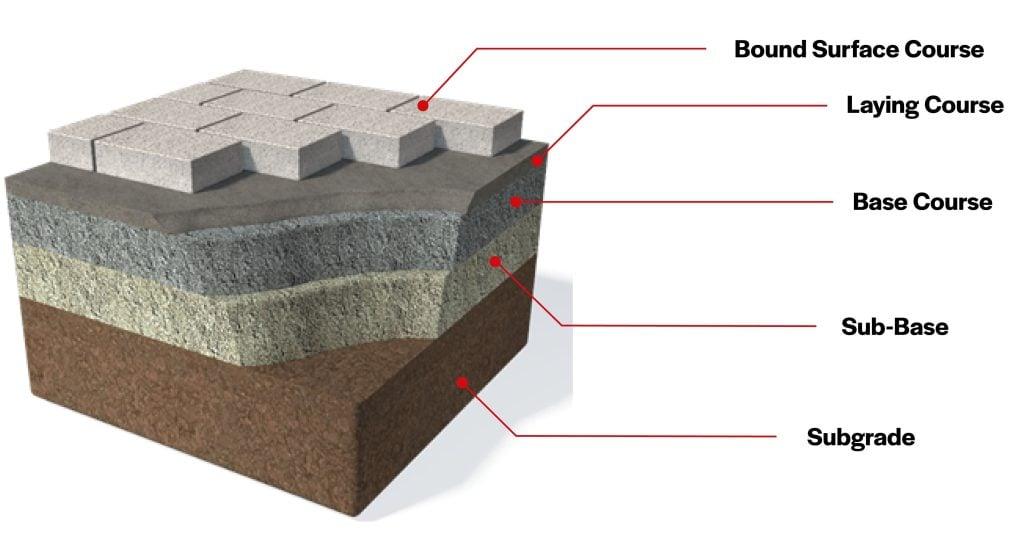
We began with a historical grounding in Roman road construction, where layered systems consisting of statumen, rudus, nucleus and summum dorsum created highly durable infrastructures through careful grading, compaction and drainage. The relevance of this precedent lies in its systemic thinking, where each layer performs a specific structural and hydrological role.
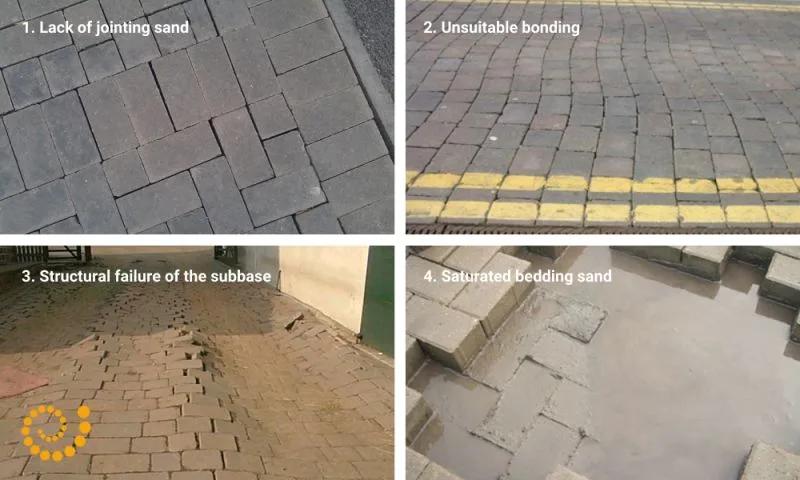
Contemporary failures often occur where this layered logic is not followed. Case studies from Dundee, Edinburgh, Galway and Oxford demonstrated recurring issues:
Poor-quality mortars leading to joint failure
Insufficient compaction in bedding layers
Incorrect moisture content during installation
Freeze–thaw damage caused by retained water
Incompatibility between bedding material and paving unit
Inadequate support for point loads such as vehicles or street furniture
These failures reinforce that paving rarely fails at the surface. It fails due to subsurface instability, poor material specification or incorrect installation practice. Steintec’s approach is centred on diagnosing these conditions and designing systems that remain stable under loading, climate exposure and long-term use.
Performance
Understanding how construction method determines flexibility, strength and permeability.
The second part of the session focused on the distinction between bound and unbound paving systems, which fundamentally affects how loads are distributed and how water moves through the surface.
Unbound systems consist of:
Compacted granular sub-base
Loose laying course such as grit sand
Pavers laid without mortar
Joints filled with sand or fine aggregate
These systems offer:
Flexibility under minor ground movement
Ease of maintenance and replacement
Inherent permeability where joints allow infiltration
Lower embodied carbon due to reduced cement use
However, they are:
Vulnerable to deformation under heavy or concentrated loads
Susceptible to rutting if compaction is inadequate
Less stable on steep gradients
Bound systems, in contrast, use:
Cementitious or polymer-modified mortars
Rigid bedding layers
Fully bonded joints
These provide:
High resistance to shear forces and point loading
Increased durability in high-traffic urban conditions
Greater surface stability and visual consistency
But they introduce:
Risk of cracking if ground movement occurs
Higher embodied carbon
Reduced permeability unless designed alongside SuDS systems
Steintec emphasised that many projects require hybrid solutions, where permeability, structural performance and durability are balanced through careful specification of:
Sub-base type such as Type 1 or Type 3 aggregate
Bedding layer gradation and thickness
Moisture control during installation
Joint width and tolerance
Thermal expansion and contraction
Resistance to freeze–thaw cycles
This reinforces that paving must be understood as a multi-layered system responding to both structural and environmental conditions.
Structure
Understanding that laying pattern directly influences structural performance.
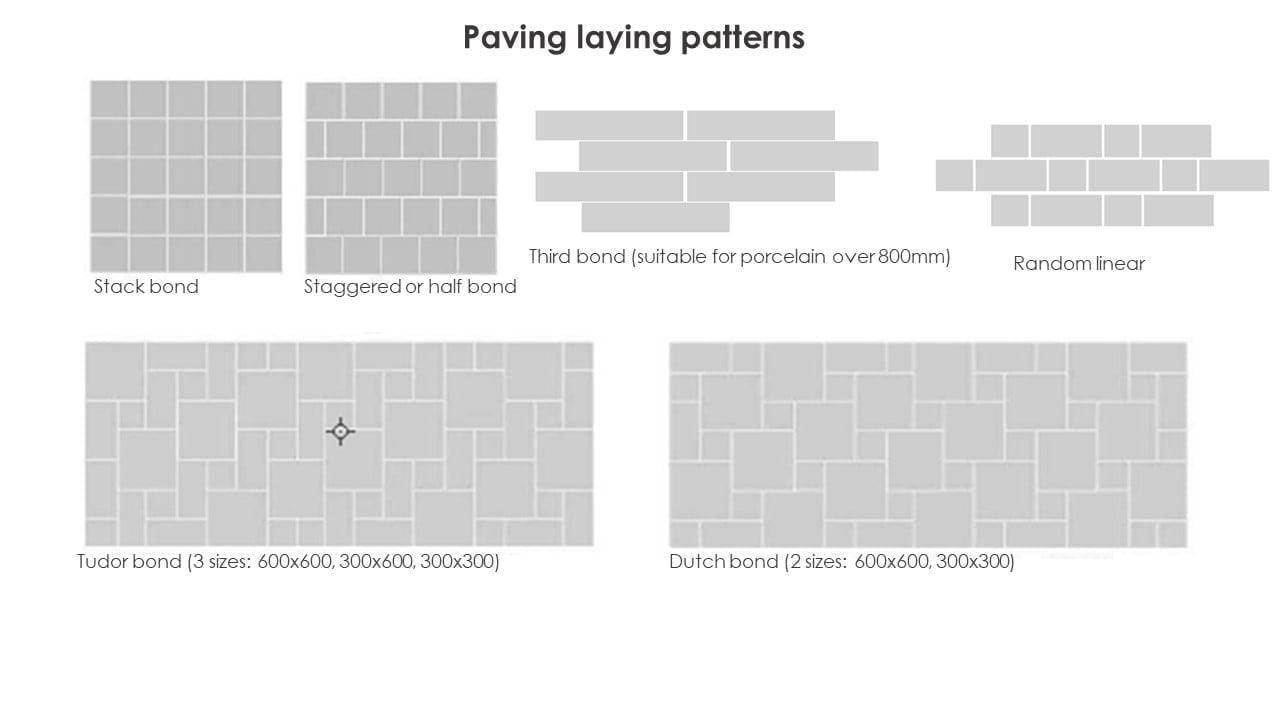
The session concluded by examining laying patterns as structural strategies rather than decorative choices. The arrangement of paving units determines how loads are transferred across the surface and how effectively the system resists movement.
Different patterns perform differently:
Herringbone (45° or 90°)
Provides strong interlock and rotational resistance
Ideal for vehicular loading and high shear conditionsStretcher bond
Simple and visually consistent
Structurally weaker with higher susceptibility to trackingBasketweave
Decorative with moderate interlock
Suitable for low-load environmentsRandom or mixed courses
Adaptable to irregular geometries
Requires precise sizing and joint control
Pattern selection influences:
Load distribution pathways
Points of structural weakness
Surface lifespan and maintenance frequency
User comfort and accessibility
In this sense, pattern operates as an extension of structural logic. It defines how forces move through the surface and how the system performs over time.
Reflection
This week reframed paving as a deeply engineered system rather than a surface treatment. Material choice, installation accuracy, sub-base design and laying pattern all contribute to long-term performance. Durability is not accidental but emerges from coordinated decisions across every layer of the system, from ground preparation to final jointing.