Oct 30, 2025
Week 6 - Beneath the Surface
The ground is never still. Beneath each layer lies memory, pressure and the quiet engineering that keeps our landscapes from collapse.
Technical
Flow
Where land begins to reveal its quiet mathematics - the shifting levels, storm-shaped thresholds and the careful choreography of earth moved, held and reformed.
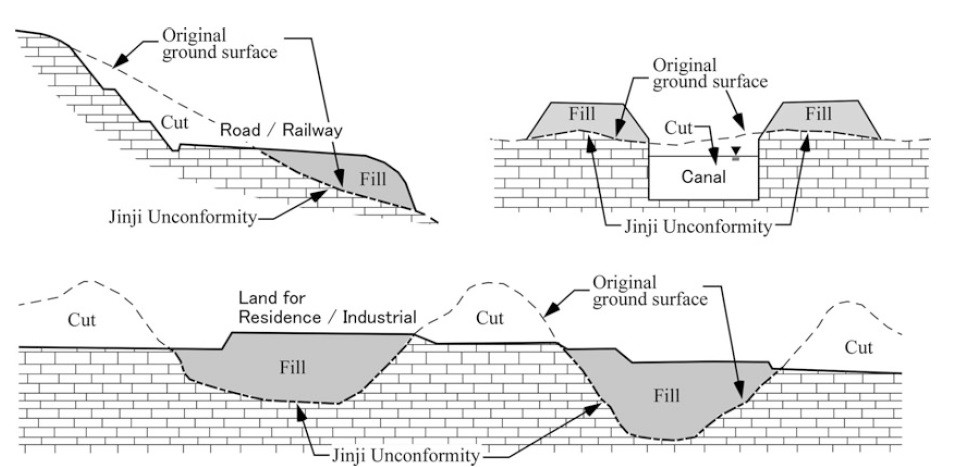
This week focused on understanding the hidden geometry of the land - site levels and how they shift, respond and hold water. We began by examining the concept of 100-year and 500-year storm events, learning how these statistical models predict rainfall intensity and the corresponding rise in stormwater levels. These projections are critical in designing flood-resilient landscapes, determining how high or low the ground should sit in relation to expected water surges. From there, we moved into the fundamentals of cut and fill, the balancing act of excavation and deposition used to sculpt sites economically and sustainably. The core elements of earthworks - excavation, fill, compaction, sub-grade and digability - provided a framework for understanding how soil moves and stabilises. Excavations can take various forms, from open-cut trenches to basements, pits and shafts, each demanding specific safety measures and shoring systems depending on soil type, groundwater and load above. When Duncan remarked, “that looks a bit precarious,” in reference to a man standing in an unsupported trench, it underscored the importance of method, precaution and respect for the ground beneath our feet.
Support
Beneath the surface lies a disciplined architecture - walls of interlocked earth and concrete, careful voids for hidden services and the quiet engineering that lets the ground hold its breath without collapsing.
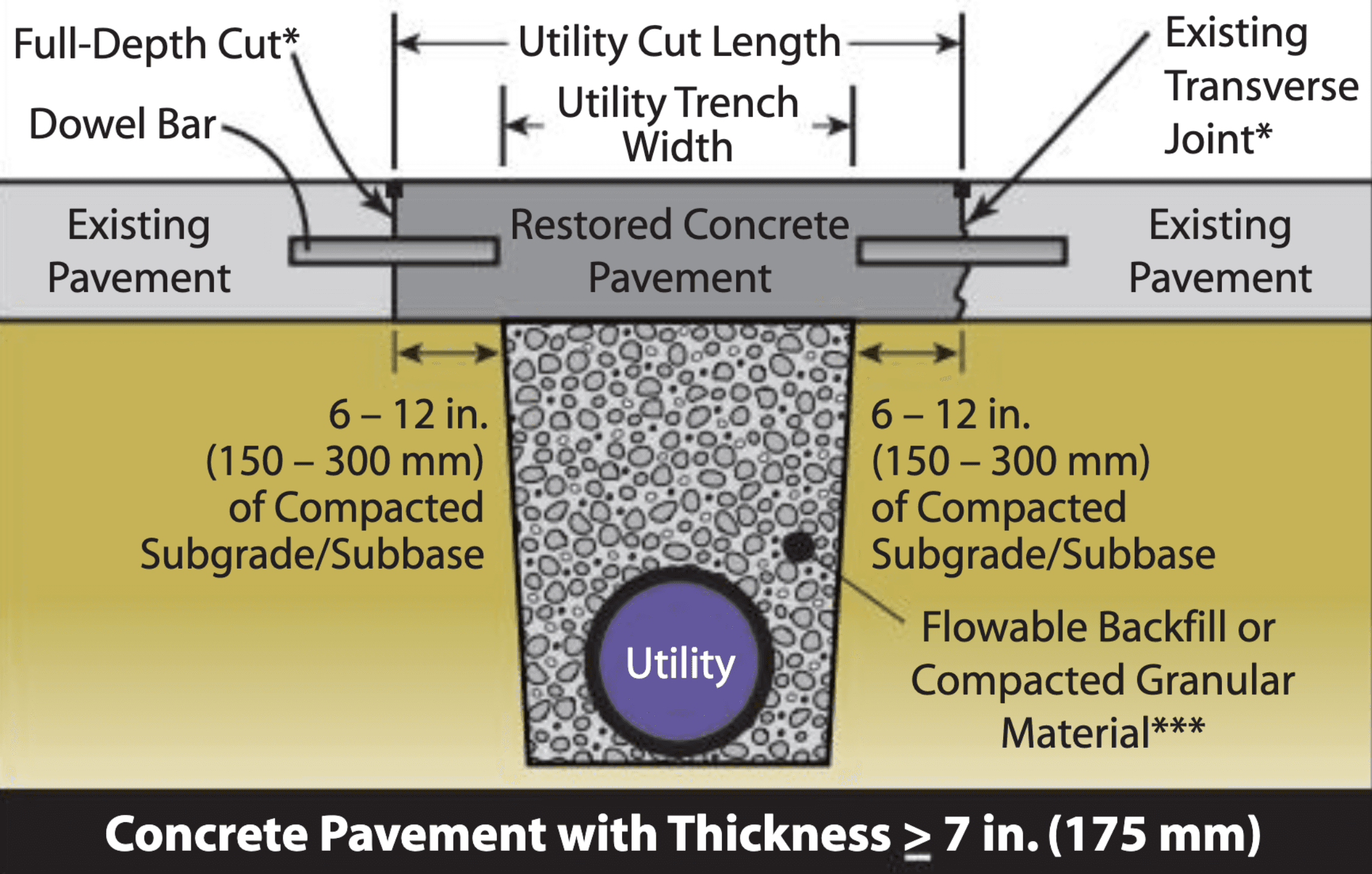
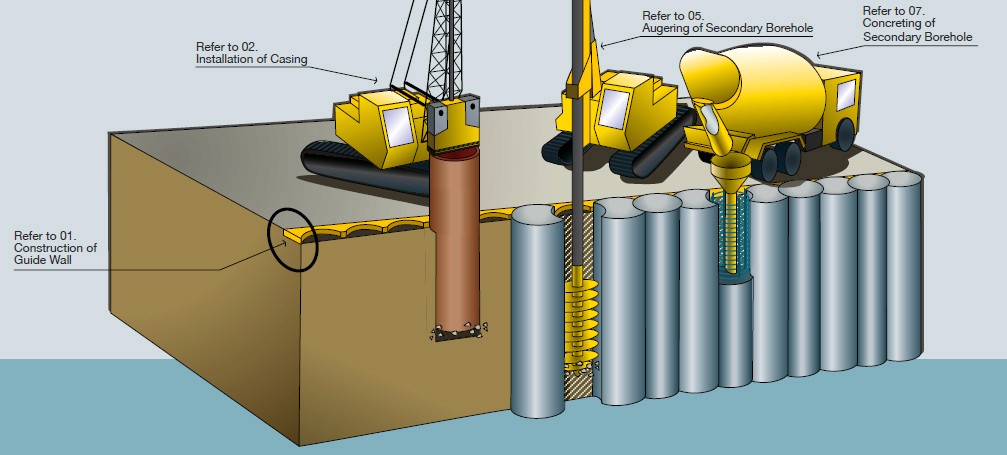
We explored the engineering principles that allow earth to hold its shape after excavation. Secant piles - interlocking bored concrete piles - were discussed as one of the most effective retaining solutions in deep excavations, forming a continuous wall that can resist both soil and water pressure. These are often reinforced with steel and cast alternately as hard and soft piles to balance strength and constructability. The lesson also highlighted how utilities and existing services complicate excavation, as their presence demands care and precision. When backfilling service trenches, washed gravel is used rather than excavated material like asphalt or clay. This prevents damage to delicate cables and pipes by avoiding sharp or heavy debris that could crush or abrade them. Every phase of excavation becomes a negotiation between utility, safety and stability - a choreography of materials beneath the visible site.
Filtration
As structure gave way to soil science, the ground revealed its deeper sensitivities — moisture, density, breathability and the quiet traces of past uses that linger beneath our feet.
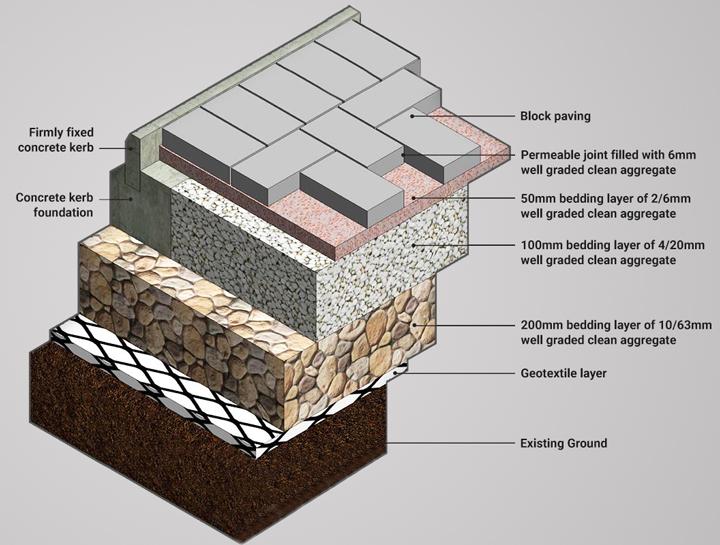
In the latter half of the session, our focus shifted from the structural to the environmental. We learned about the Proctor test, which determines the optimum moisture content and maximum dry density of soil and CBM (Cement Bound Material), used for stabilising sub-bases. Geogrids and Cellweb cellular confinement systems were introduced as reinforcement solutions that distribute loads and protect root zones - crucial for no-dig construction around trees. These cellular systems help maintain permeability while providing structural integrity, allowing the ground to breathe. Surface materials such as resin-bonded and resin-bound finishes were compared; the former is semi-permeable, with loose aggregate adhered to the surface, while the latter fully encapsulates aggregates within the resin, creating a more uniform, load-bearing and porous surface.
We closed with a discussion on contamination - its causes, detection and management. Contamination can arise from industrial residues, hydrocarbons, heavy metals, or organic decay, often signalled by a fetid smell or discoloured soil. Specialist consultants investigate past land uses, assess risk and liaise with local authorities who maintain contamination records. Their findings determine whether soil must be remediated, capped, or removed entirely. Through these studies, we came to see that even the ground holds a history - one that can nurture or endanger, depending on how it is read and respected.
Reflection: Understanding excavation, cut and fill, drainage, utilities and surface permeability emphasized that landscape design is a careful orchestration of technical, ecological and experiential considerations.