
Oct 9, 2025
Week 3 – The Alchemy of Bricks
Exploring how clay composition, firing regimes and construction logic shape the performance and precision of brickwork.
Technical
Flow
Brick as a manufactured balance of clay chemistry, moisture control and thermal transformation.
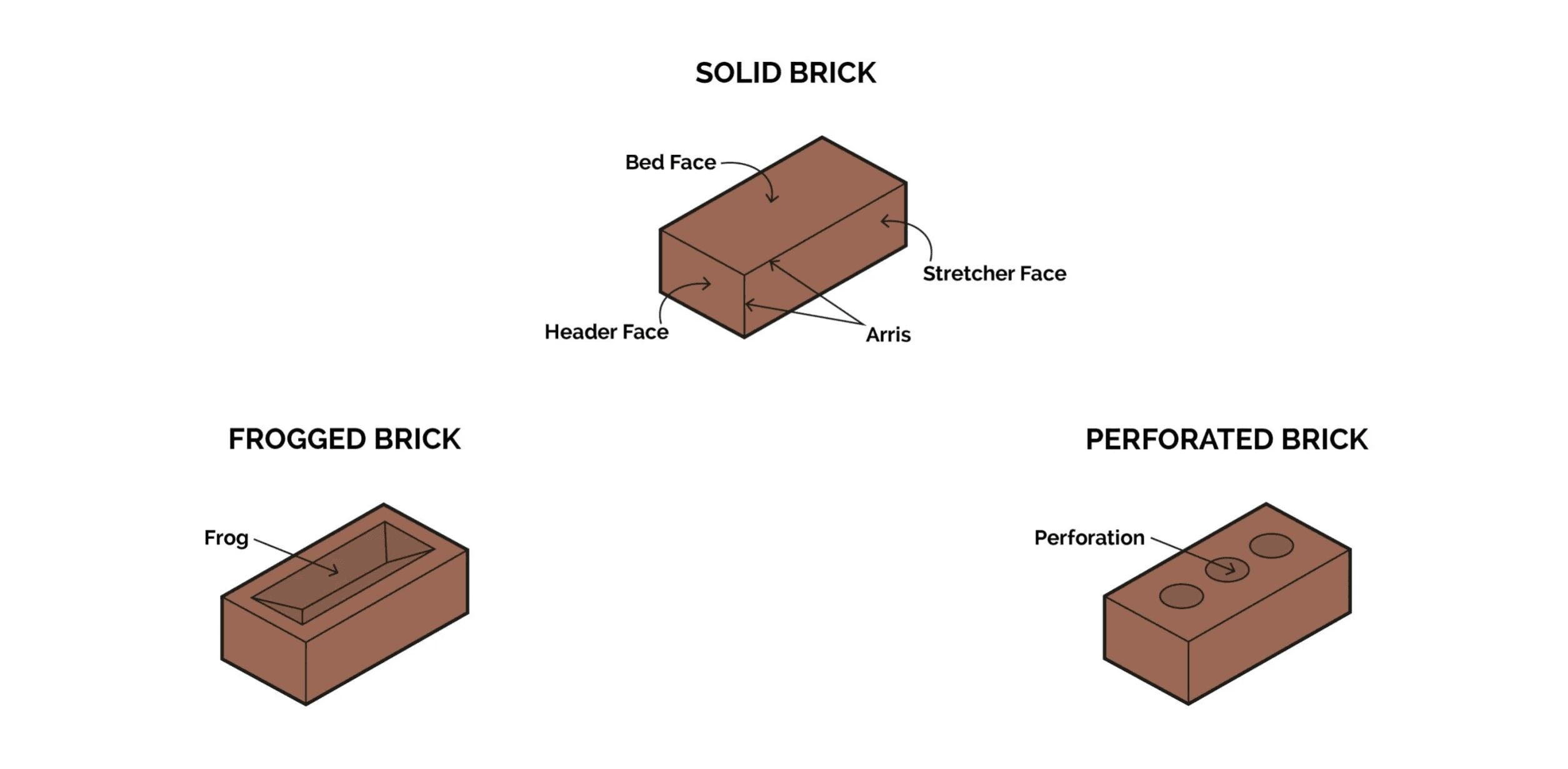
This session focused on brick as a materially engineered product rather than a neutral building unit. Sarah Jefferson, UK Technical Advisor at Vandersanden, introduced the company’s brick production process, using the Briljant Zwart Impression brick as a case study. Vandersanden combine river clays with Westerwald clays, selected for their complementary plasticity, mineral composition and firing behaviour. This blend is particularly suited to extruded facing bricks, where clay is forced through a die to produce consistent dimensions before cutting and firing.
The rough surface texture of the Briljant Zwart Impression brick is achieved through a controlled mechanical process prior to firing, rather than post-treatment, ensuring durability and consistency across batches. The production process depends on the careful calibration of water content, which determines workability during extrusion, and kiln temperatures, which vitrify the clay and lock in strength, colour and frost resistance. Brickmaking was framed as an elemental process where earth provides raw material, water enables forming and fire permanently transforms the clay into a stable construction unit. This balance directly affects compressive strength, porosity, water absorption and long-term performance in exposed environments.

Calculating
Brick bonding as a system of load distribution, dimensional control and visual rhythm.
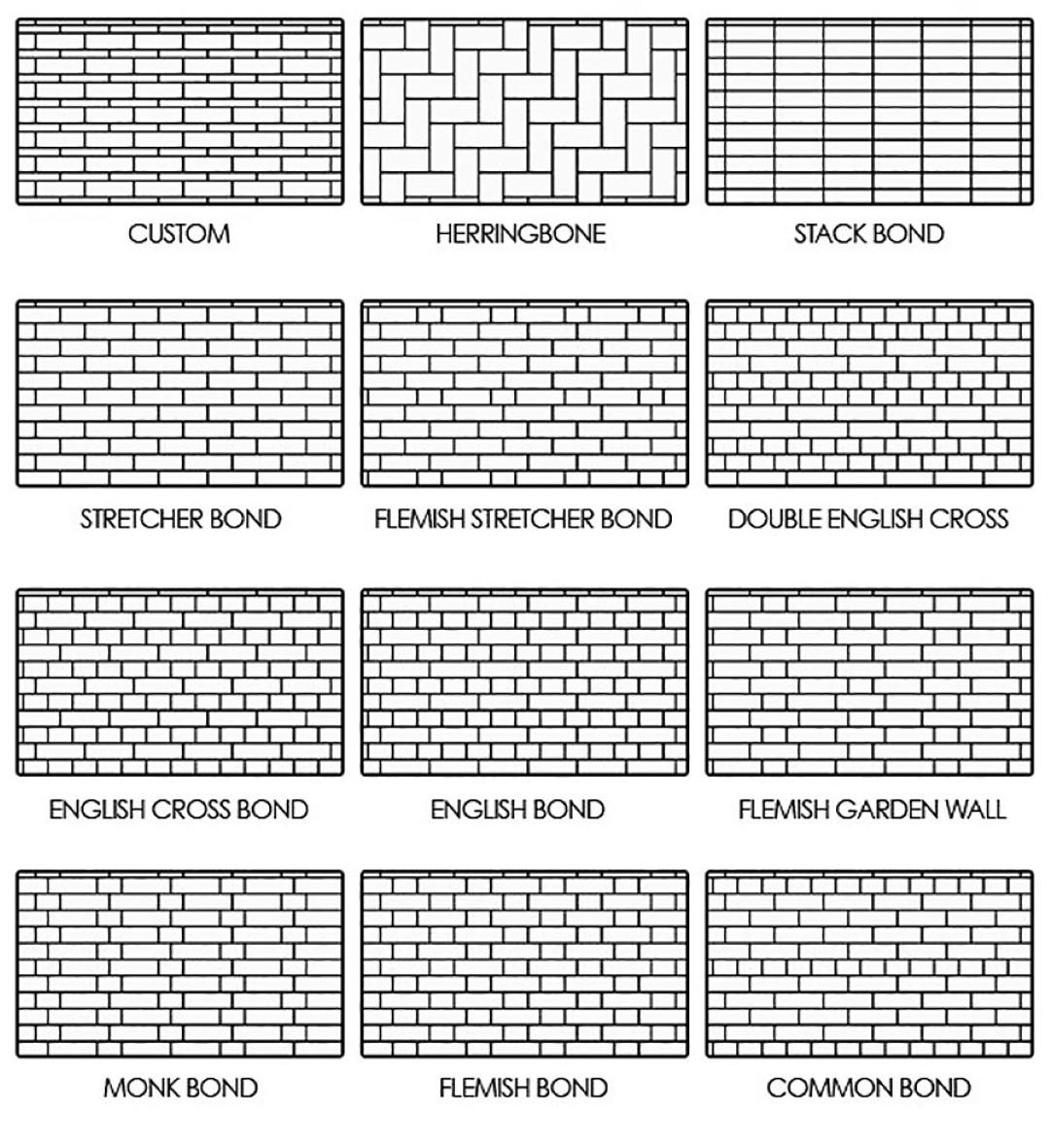
The latter part of the lesson shifted from production to brickwork assembly, focusing on bonding patterns as both structural and spatial systems. We studied stretcher bond, English bond and Flemish bond, each of which arranges bricks differently to manage load transfer and visual pattern. Stretcher bond, the most commonly used contemporary arrangement, relies on consistent overlap to distribute vertical loads efficiently while minimising cutting and material waste. English and Flemish bonds introduce alternating courses or headers, increasing wall thickness and structural interlock but also affecting material quantities and construction time.
Understanding bond types is essential for accurate material calculation. Brick dimensions, typically around 215 x 102.5 x 65 mm, must be considered alongside standard 10 mm mortar joints, which significantly affect overall wall length and height. The arrangement of headers and stretchers alters brick counts per square metre and influences wall stability. This section reinforced that bonding is not decorative alone, but a calculated system that governs strength, tolerance and construction efficiency.
Measuring
Measurement, estimation and tolerance as foundations of construction accuracy.
The final segment of the session involved practical application through measurement and estimation exercises. Using scaled drawings and known brick dimensions, we calculated the number of bricks required for specific wall lengths, accounting for mortar joint thickness and bonding pattern. This process demonstrated how small dimensional assumptions compound across a structure, making precision critical at early planning stages.
Accurate estimation reduces material waste, controls cost and ensures constructability on site. It also informs setting-out, sequencing and coordination with adjacent materials such as copings, paving or structural elements. For landscape architecture, these calculations are particularly relevant where brickwork interfaces with ground levels, steps or retaining structures, where tolerances directly affect drainage performance and accessibility. The exercise highlighted that technical literacy in measurement and estimation underpins both aesthetic control and structural reliability.
Reflection
Examining brick production and bonding reinforced that brickwork is a highly controlled system shaped by material science and construction logic. From clay selection and firing regimes to bond choice and dimensional calculation, each decision influences performance, durability and visual outcome. This session emphasised that craftsmanship in brickwork is inseparable from technical precision, and that understanding these processes is essential for designing and detailing robust landscape and architectural interfaces.