Oct 16, 2025
Week 4 – Site Visit with Miller Druck: Material Craft and Urban Detailing
Understanding how material selection, surface treatment and substructure combine to shape performance, durability and experience in the public realm.
Technical
Flow
Stop 1: King’s Cross – Reading material choice as a response to use, durability and water
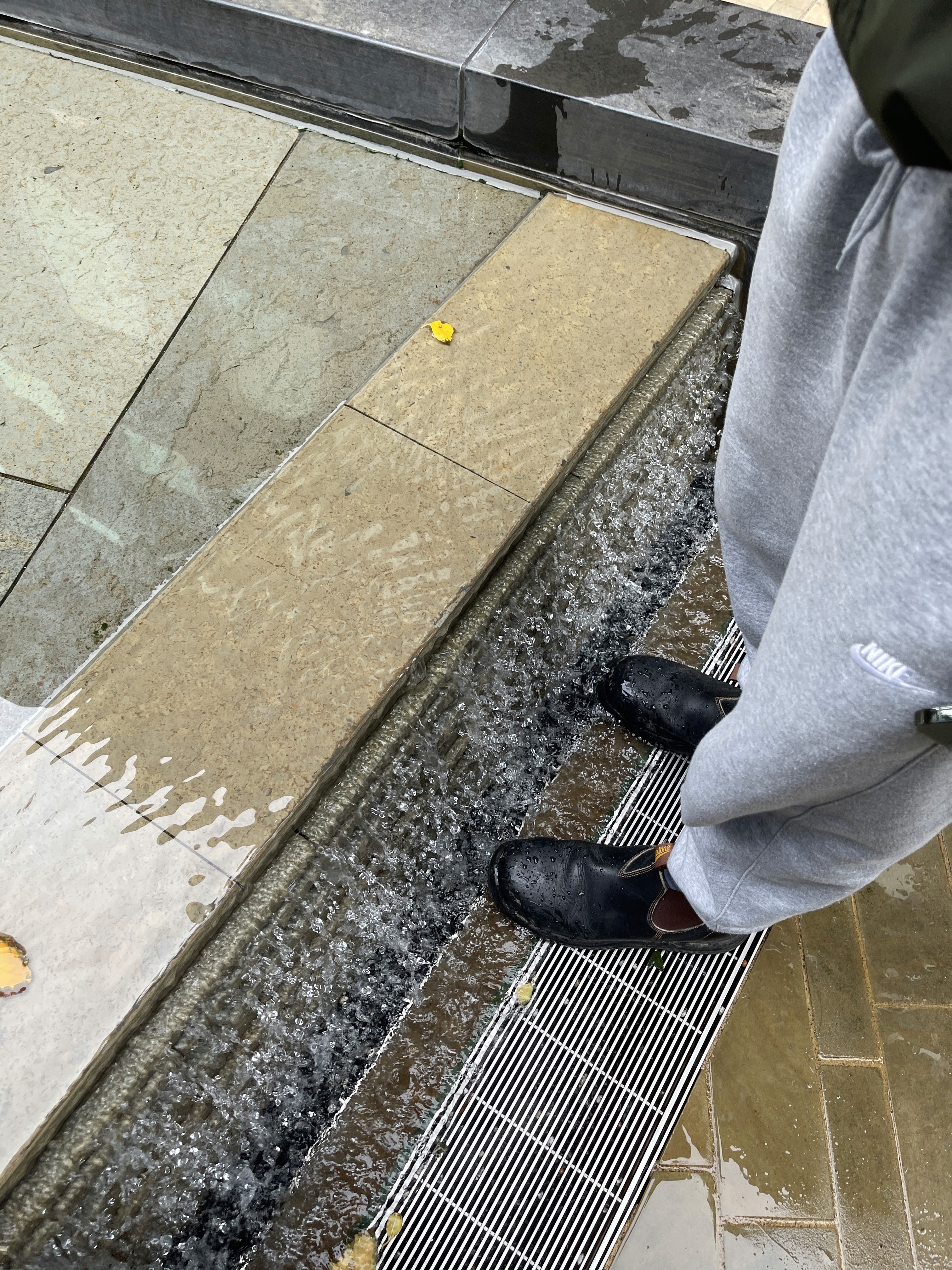
At King’s Cross, the ground plane demonstrates a highly coordinated material strategy, where different stones are selected based on performance requirements and spatial hierarchy. Within Pancras Square and surrounding areas, Caithness flagstone is used in the water feature, valued for its density, low porosity and resistance to algae staining. Its fine grain and durability make it suitable for constant wetting and drying cycles.
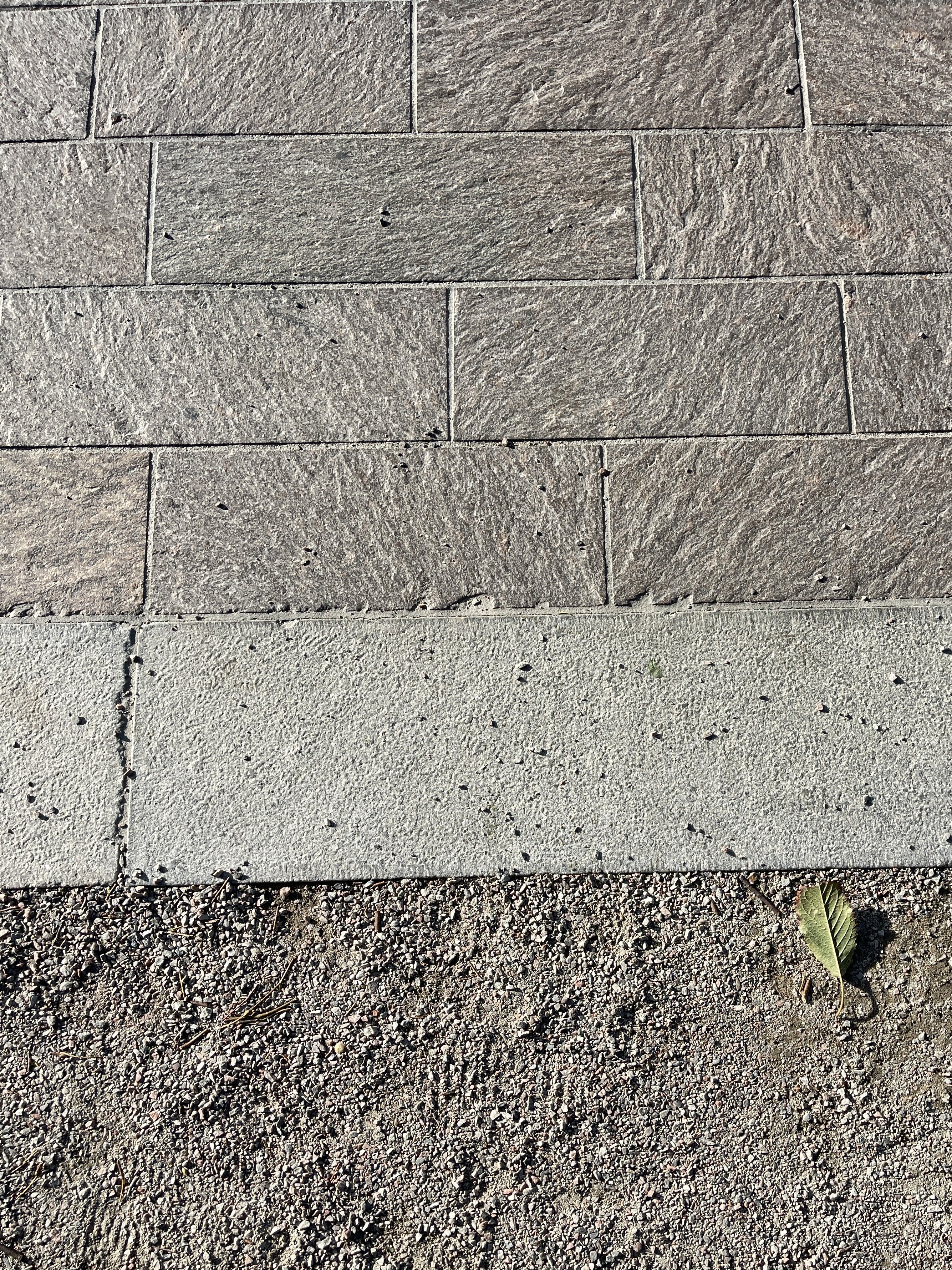
Across the wider paving palette, Cromwell sandstone from Halifax, Whitworth sandstone and Scoutmoor Yorkstone are used. These sandstones are chosen for their compressive strength, slip resistance and weathering characteristics, particularly in high footfall urban environments. Surface finishes such as flamed or textured treatments increase friction, making them suitable for public safety under wet conditions.
Texture was emphasised as it operates as a subtle wayfinding tool, guiding pedestrian movement without signage. This surface articulation is supported by unseen technical layers beneath, including bedding materials, jointing systems and drainage layers designed to manage loading, thermal movement and water ingress. These sub-surface assemblies ensure that visual consistency at ground level is maintained despite constant use, seasonal expansion and exposure to weather. The stop reinforced that successful public realm paving depends as much on build-up and tolerance control as on material choice.
What becomes clear is that material selection is not aesthetic alone. Each stone responds to:
Load and footfall intensity
Water exposure and drainage conditions
Maintenance and long-term wear
Flow
Stop 2: St Paul’s Reflection Garden – Surface, Water and Build-Up
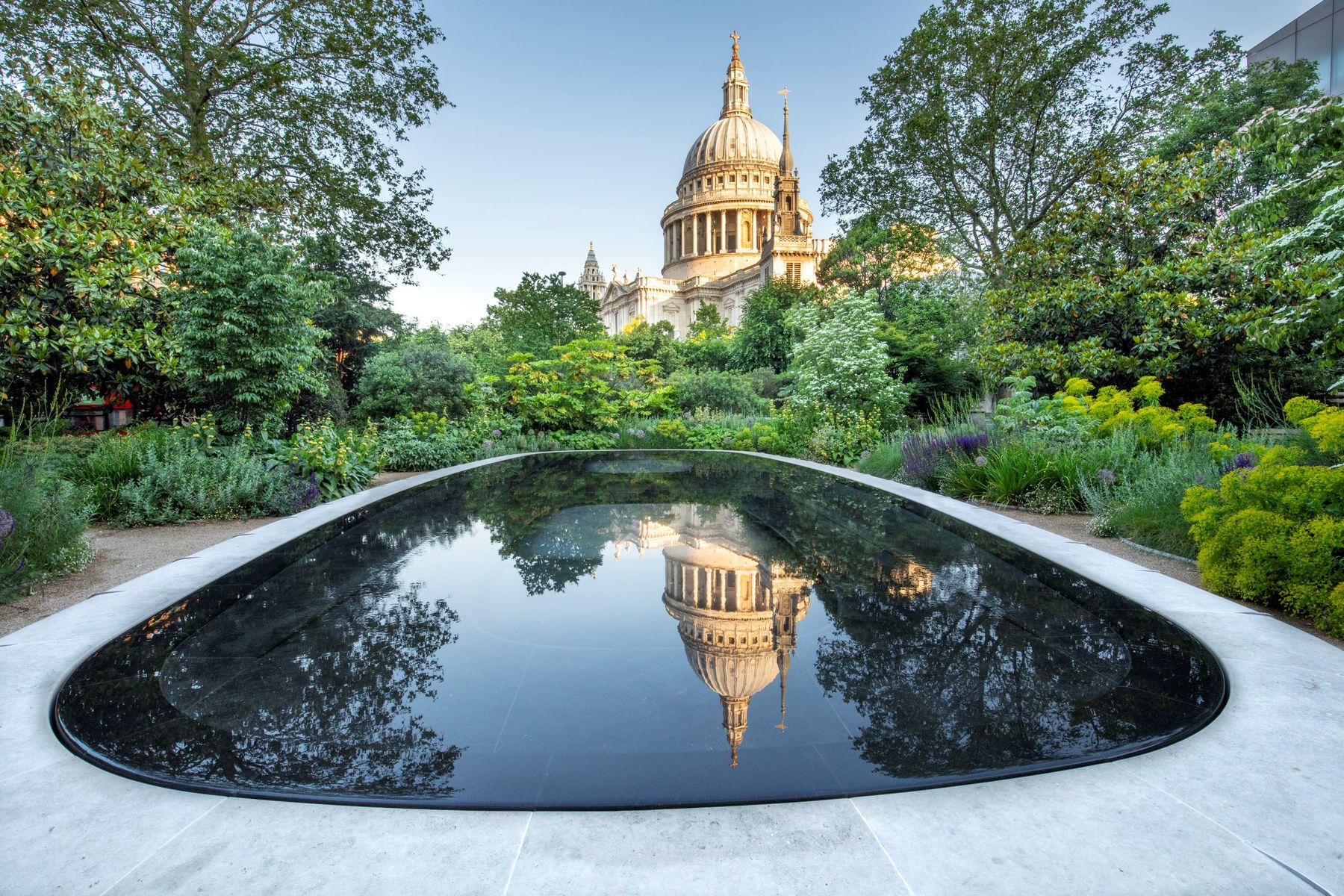
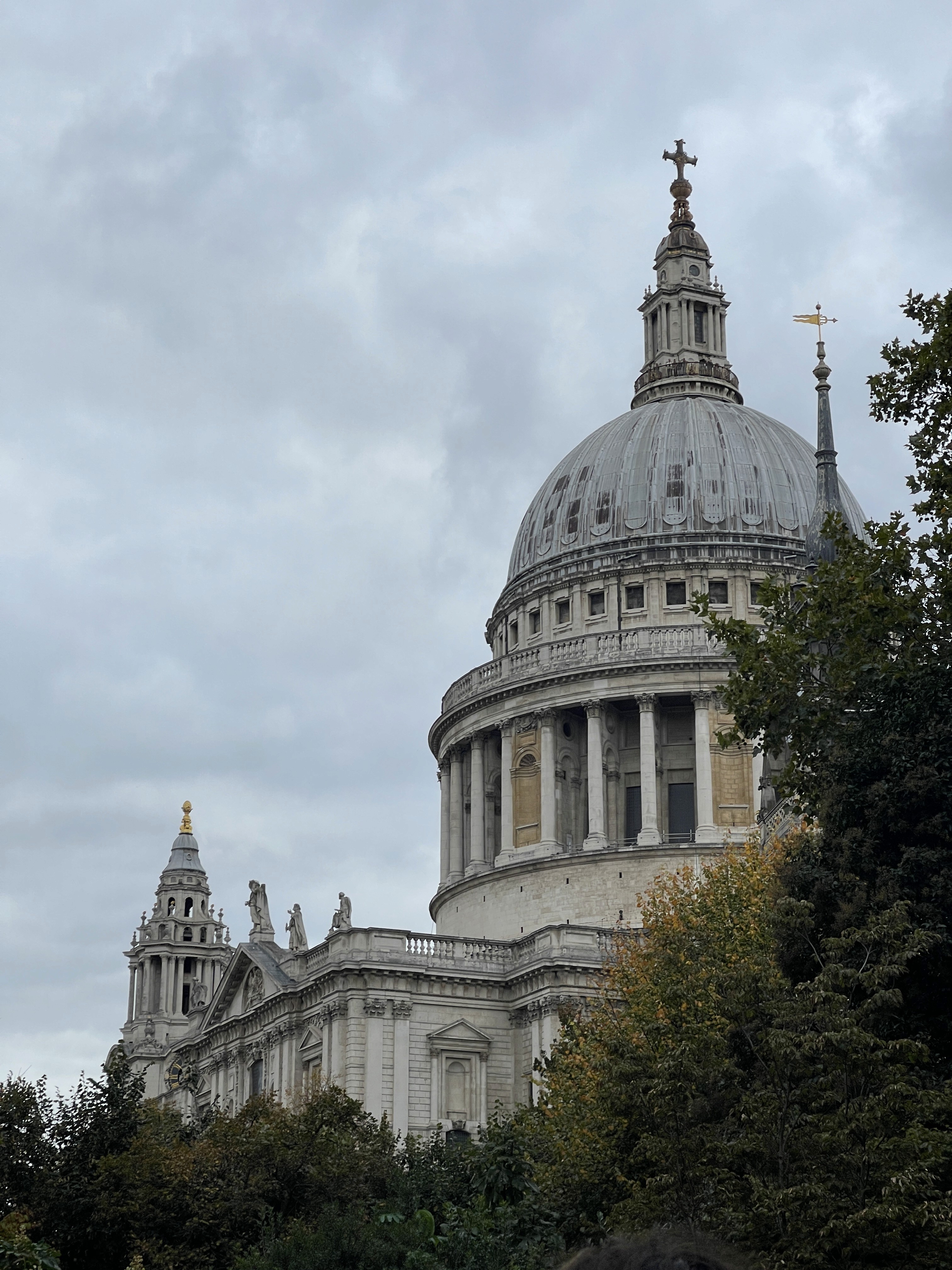
At St Paul’s Reflection Garden, the relationship between surface material and water control becomes more explicit. The reflective pool appears minimal, but relies on precise construction to maintain a consistent water level and surface clarity.
The surrounding paving incorporates permeable surfaces, allowing water to infiltrate while maintaining structural stability. Beneath this, a layered system ensures performance:
Surface material providing slip resistance and durability
Bedding layer ensuring level placement
Sub-base distributing load and enabling drainage
Waterproofing and containment systems within the basin
Drainage outlets controlling overflow and circulation
The stillness of the water is therefore engineered through accurate levelling, controlled inflow and consistent base construction. Without this, the reflective quality would be disrupted by rippling, uneven surfaces or water loss.
Precision
Stop 3: Rathbone Square – Coordinating hard materials to achieve durability and clarity of use.
Rathbone Square demonstrates a shift toward harder stone materials and tighter detailing tolerances. The primary paving material is flamed Azul Platino granite from Spain, chosen for its durability, low water absorption and slip resistance created through thermal surface treatment.
This is contrasted with honed Picasso granite from Quebec, Canada, used in planters and water features. The honed finish provides a smoother surface suitable for seating and tactile interaction while maintaining structural integrity. The contrast between flamed and honed finishes reflects different functional requirements, circulation versus occupation.
These materials are installed with tight tolerances, typically within ±5 mm, to prevent trip hazards and ensure consistency. Beneath the surface, the same layered logic applies, with sub-base, bedding and drainage systems working together to prevent movement and failure.
The coordination of joints, edges and levels ensures that:
Water is directed away efficiently
Materials accommodate thermal movement
Surfaces remain safe and durable over time
Reflection
This visit reinforced that public realm design is defined by material performance as much as spatial intent. Stone selection, surface treatment and substructure must be coordinated to ensure durability, safety and long-term function. The quality of a space is not determined solely by what is visible, but by how effectively its underlying systems are resolved.