Feb 13, 2026
Week 17 – Ecological Definition and Ground Plane Clarity
Clarifying ecological intention and learning that spatial acceptance depends less on redesign and more on definitional precision.
Technical
Flow
Defining function as the basis for accepting scale.
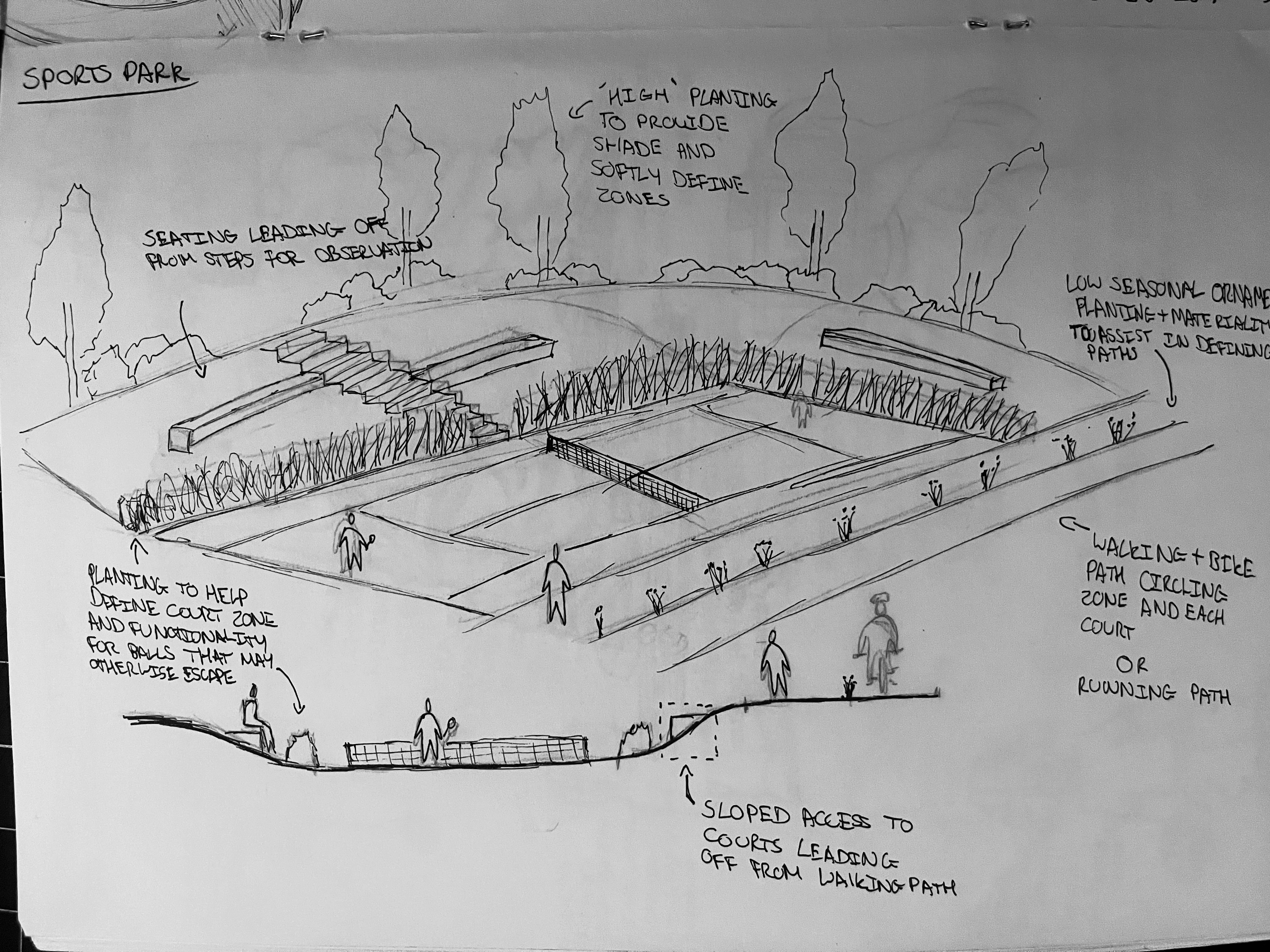
This tutorial with Peter was grounding in tone and direction. Rather than suggesting major redesign, he emphasised that the boardwalk and associated spaces do not necessarily require formal alteration, but clearer functional definition. At eight metres and beyond, the boardwalk’s scale must be justified not through aesthetic argument but through programme, occupation and ecological response. The issue is not excess size, but insufficient articulation of how that size performs.
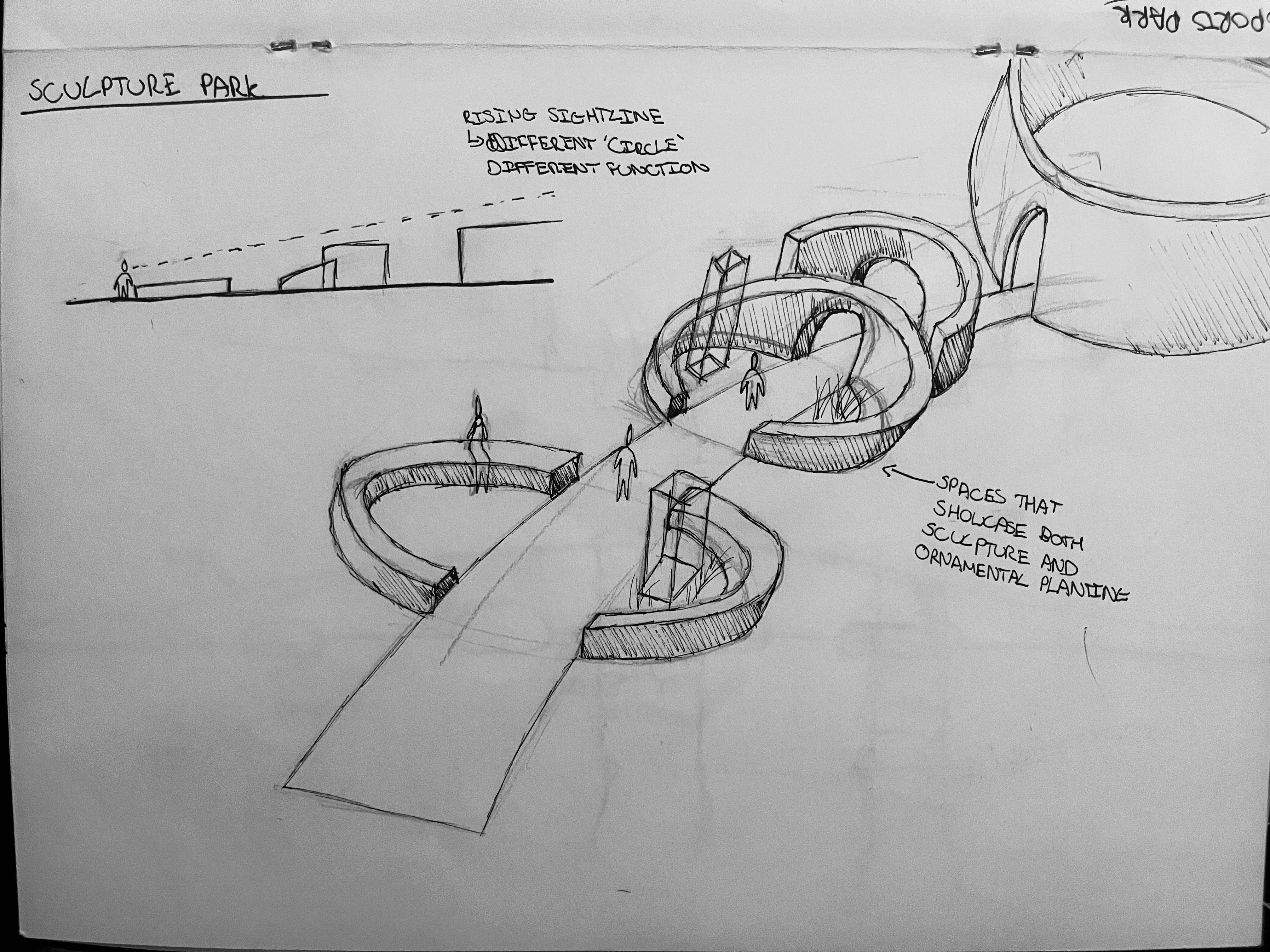
We discussed how spatial acceptability is tied to legibility. If terraces, widened platforms and sculptural voids are clearly assigned roles, whether ecological overlook, market spill-out or gathering zone, then scale becomes defensible. This reframed the challenge from redesigning geometry to strengthening explanation and sectional demonstration.
Freshwater
Expanding planting logic through a non-tidal water regime.
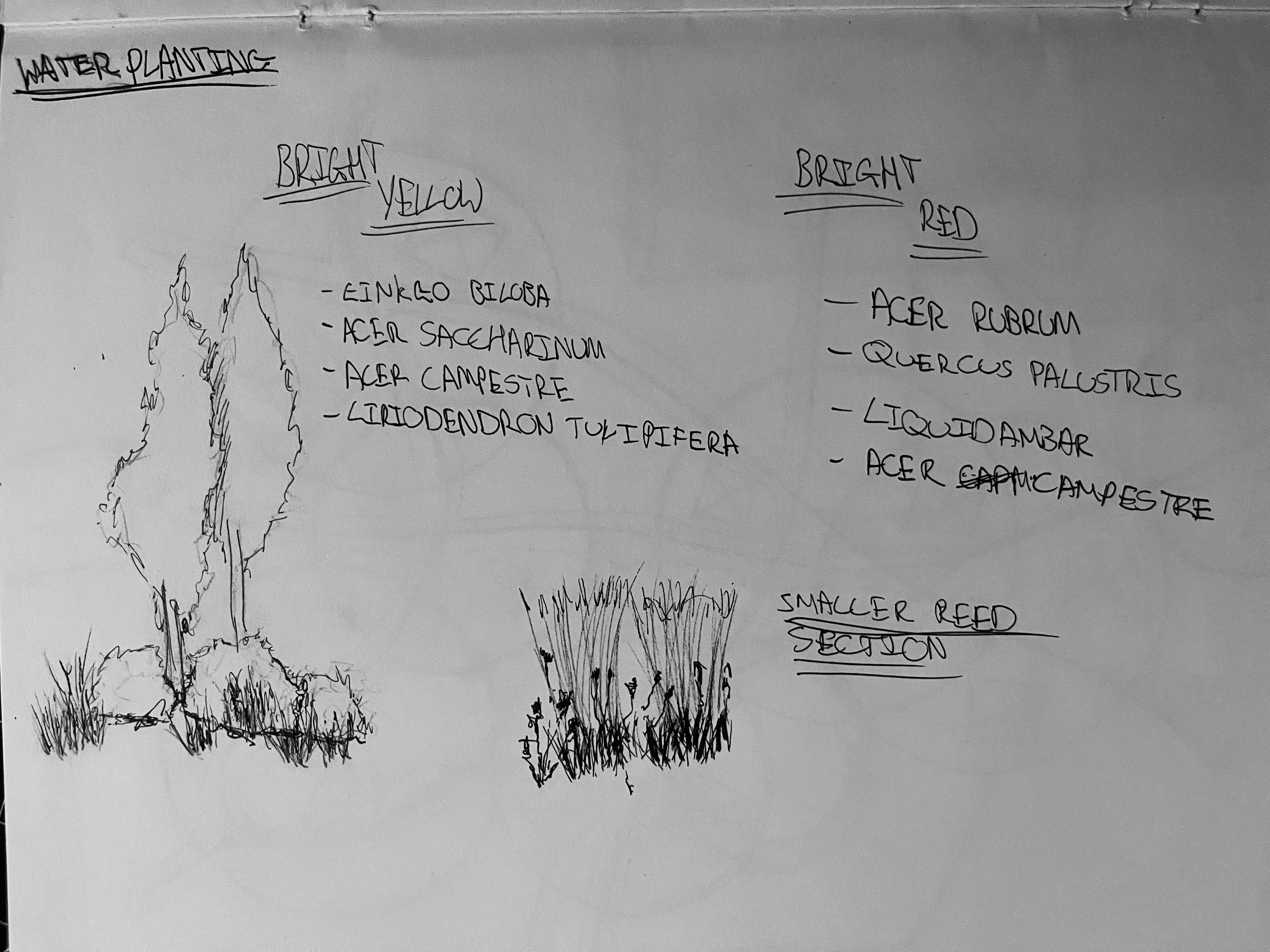
A substantial portion of the discussion focused on the ecological implications of the recent shift from a tidal system to a freshwater one. By removing saline influence and relying on rainwater and greywater capture, the site now supports a broader range of planting typologies. Freshwater wetlands allow for reed beds, marginal planting and emergent aquatic species that would not tolerate brackish fluctuation.
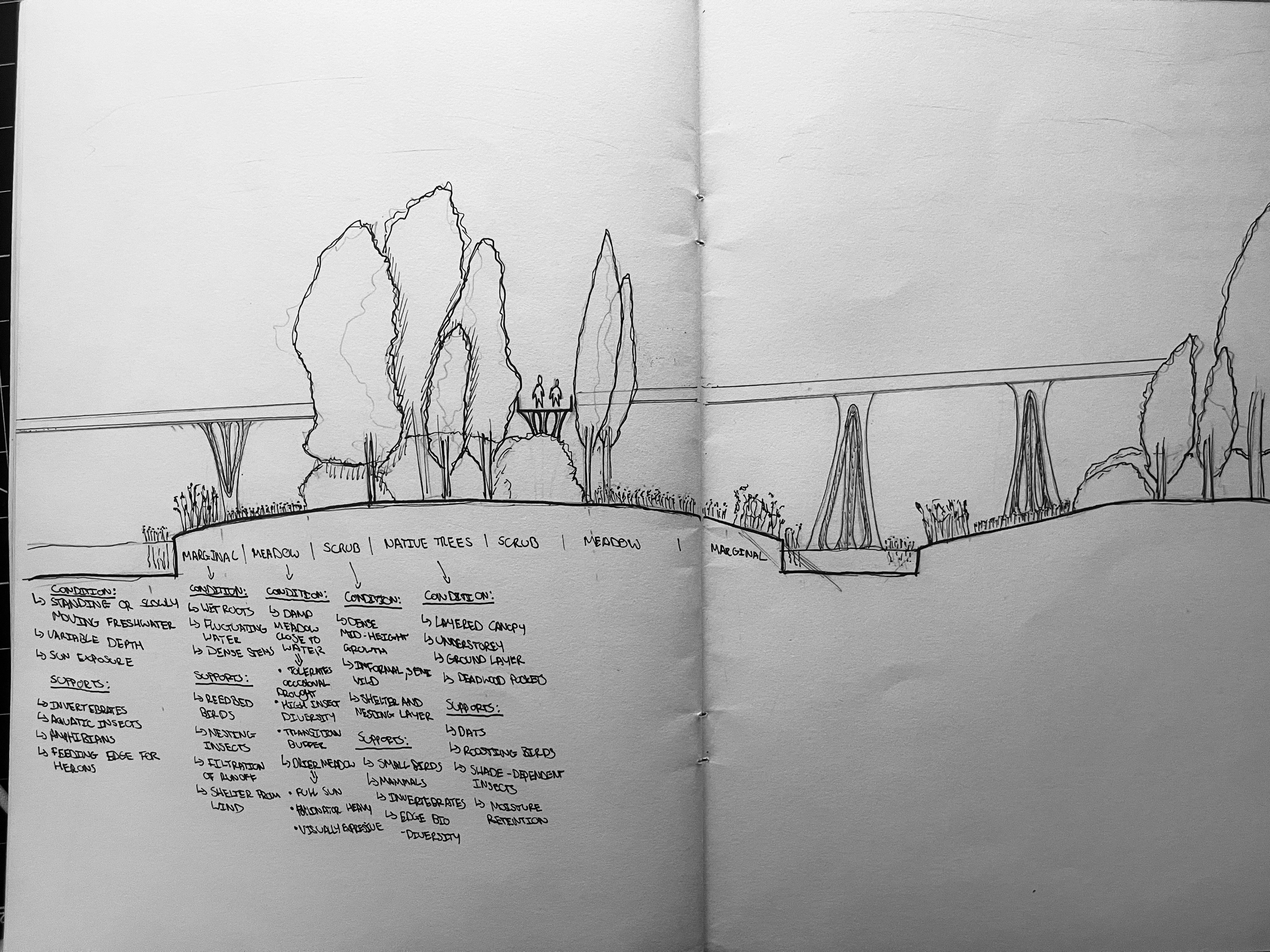
We sketched through ecological sections, testing transitions from open water to reed margins, then into meadow and woodland edge conditions. Peter encouraged me to allow planting density and species selection to emerge from hydrological logic rather than aesthetic preference. This means understanding water depth, soil saturation and seasonal fluctuation as primary determinants of habitat type. The move toward a purely freshwater system strengthens biodiversity potential and simplifies long-term ecological management.
Ground
Explaining gradient, planting transition and material change more explicitly.
Peter was satisfied with the conceptual direction of the ground plane but stressed the need for clearer articulation. In particular, he wants to see the gradient and planting transitions explained more precisely. The shift from more ornamental and structured planting near built edges to looser, more naturalistic and ecologically driven planting within the core habitat zones must be made legible.
This involves diagramming how species composition changes across zones, how soil profiles differ, and how maintenance regimes shift from managed urban edge to semi-wild interior. Without this clarity, the ecological ambition risks appearing decorative rather than systemic. The planting strategy must demonstrate not only aesthetic change but ecological function, habitat provision, refuge and long-term resilience.
Reflection
This session did not destabilise the project; it clarified it. The freshwater decision has opened ecological potential, but that potential now requires disciplined explanation. The boardwalk’s scale can remain ambitious, but only if its functions are defined and supported through sectional clarity and ecological logic. The work is no longer about expanding ideas, but about making existing systems explicit, legible and defensible.