Jan 23, 2026
Week 14 – Recalibrating the Walk
A week spent confronting the consequences of scale, and learning how circulation, structure and narrative must work together if the boardwalk is to become a place rather than just a path.
Studio
Scale
Realising that an eight-metre boardwalk cannot behave like a footpath.
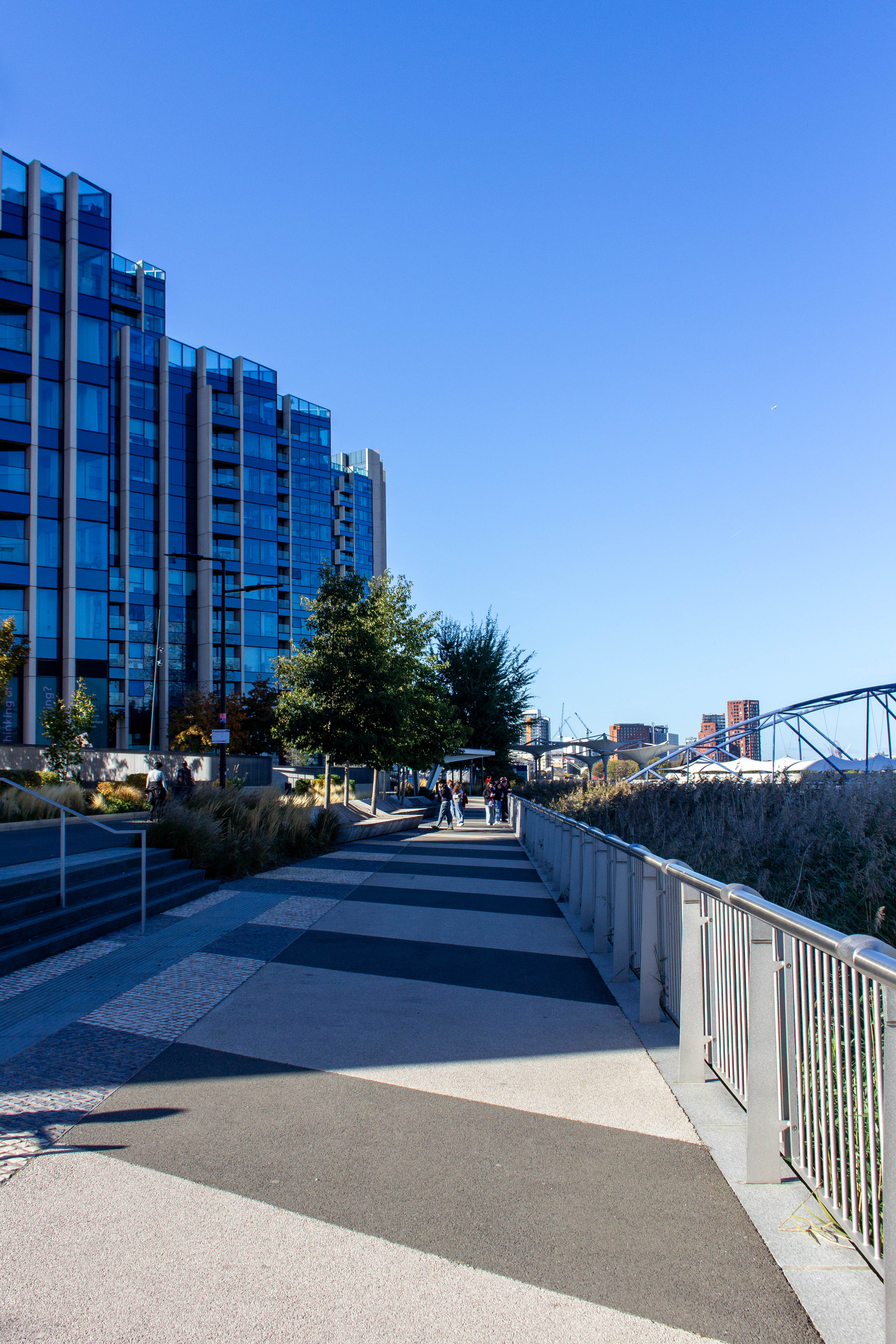
In discussion with Mohamad, the scale of my boardwalks became the central focus of the week. Until this point, I had not fully interrogated what it means for a path to be a minimum of eight metres wide, and in places closer to twenty. We agreed that this scale is not inherently wrong, but it fundamentally changes what the boardwalk is. Rather than functioning as a route of traversal, it must operate as a public space in its own right, closer in ambition to something like the High Line, where movement, pause, encounter and occupation coexist. This shifted my thinking away from treating width as excess and toward understanding it as potential, space that needs programme, edge conditions, moments of rest and reasons to linger.
We also discussed access to the surrounding green and pond spaces, and the importance of experimenting with how the boardwalk touches down. Introducing smaller, more traditional paths that slip down into the landscape allows for softer transitions, animal-only zones and practical access for maintenance. These secondary routes relieve pressure from the main walk and help prevent it from becoming the sole organiser of the site.
Threshold
Designing how the walk meets the ground, not just how it floats above it.
A significant part of the conversation focused on vertical movement and compliance. Mohamad introduced Document M and UK standards for slopes and landings, particularly the requirement that ramps steeper than 1:20 must include regular landings to allow rest and accessibility. To avoid fragmenting the boardwalk with constant landings, we discussed using longer, gentler gradients so the walk can rise gradually to its full height while remaining accessible. This clarified that the geometry of the boardwalk is as important as its plan.
We also addressed the spatial problem beneath the structure. The first four metres below the boardwalk would be largely unusable if left as void, so we discussed building up the ground plane to meet it, creating sloped landforms that allow people to approach the walk more playfully, moving up through landscape rather than stepping directly onto a deck. This also reframed entrances as moments of integration rather than abrupt transitions, each touchdown adapting to the conditions it meets rather than repeating a generic detail.
Circulation
Letting movement bind the site rather than dominate it.
Later, in conversation with Roo, I expressed uncertainty about how to programme the boardwalk without simply filling it with objects and activity for the sake of it. We discussed whether the walk even needs to be the primary attraction, or whether it might instead act as a thread that stitches together the site’s most important moments. This reframing reduced the pressure to overload the path and allowed space for emptiness, quiet and legibility.
We talked extensively about circulation, particularly the discomfort that can arise in very wide spaces when they are sparsely populated, something evident in parts of the Olympic Park. We agreed this made the Olympic Park a useful precedent, as it was designed to accommodate both high-capacity events and everyday low-intensity use. This reinforced the importance of designing for variable occupancy. For animal-only zones, we discussed using dense planting as both ecological refuge and visual buffer against the adjacent road. Finally, we addressed representational issues, adjusting the extents of the 1:500 drawing to better capture key areas, and using movement and annotation in the 1:2500 plan, particularly around the cement factory, to acknowledge its role in the site’s ongoing narrative of production, accumulation and transformation.
Reflection
This week fundamentally changed how I understand the boardwalk. It is no longer just a device for movement, but a spatial condition that must negotiate scale, access, comfort, ecology and narrative simultaneously. The conversations helped me see that restraint is as important as activation, and that the boardwalk’s success will depend less on what I add to it and more on how carefully it connects, frames and choreographs the site around it.