Jul 13, 2024
Long Wall Ecology Garden
A constant in motion, a pause along the way.
Photography
Community
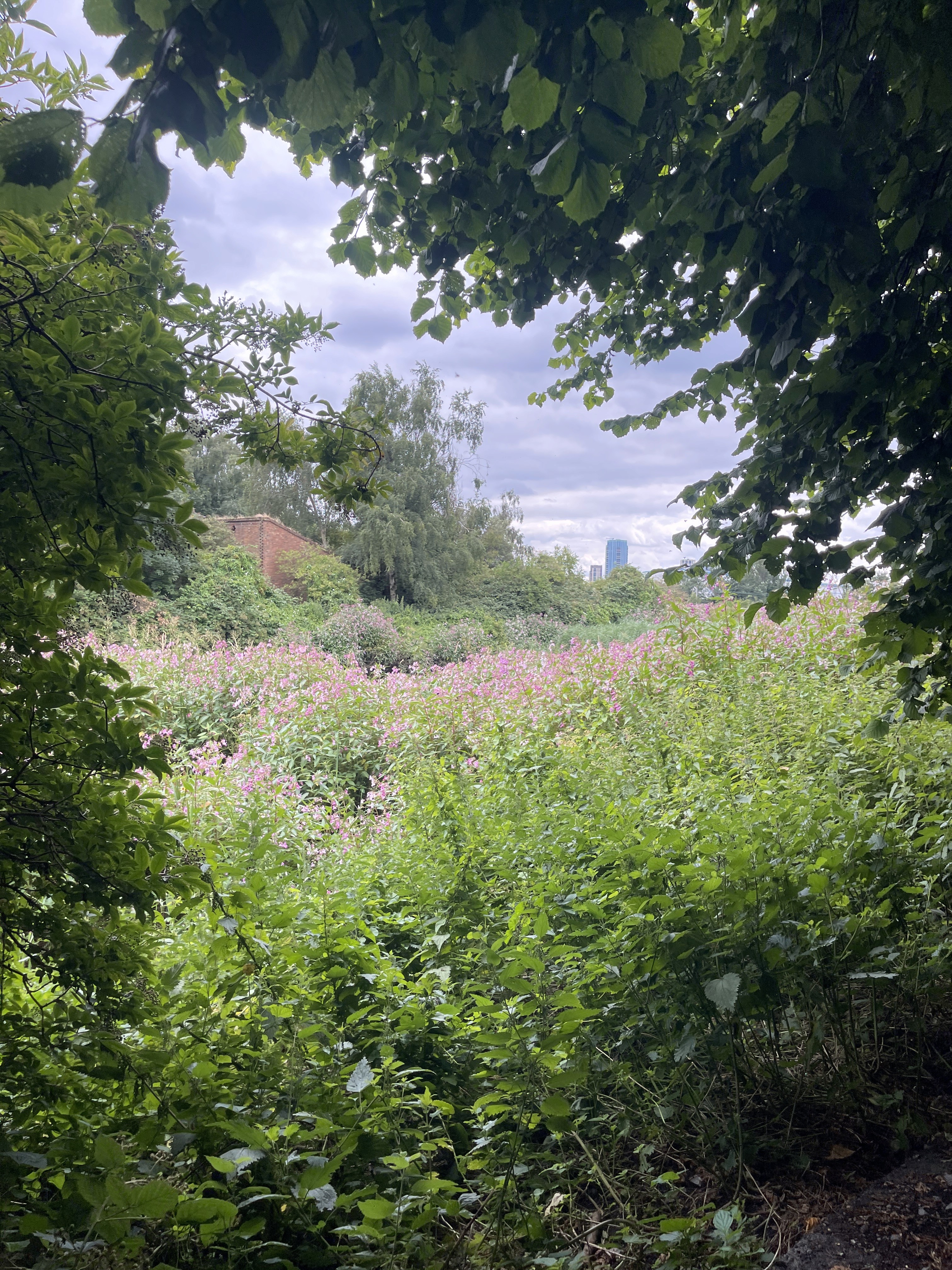
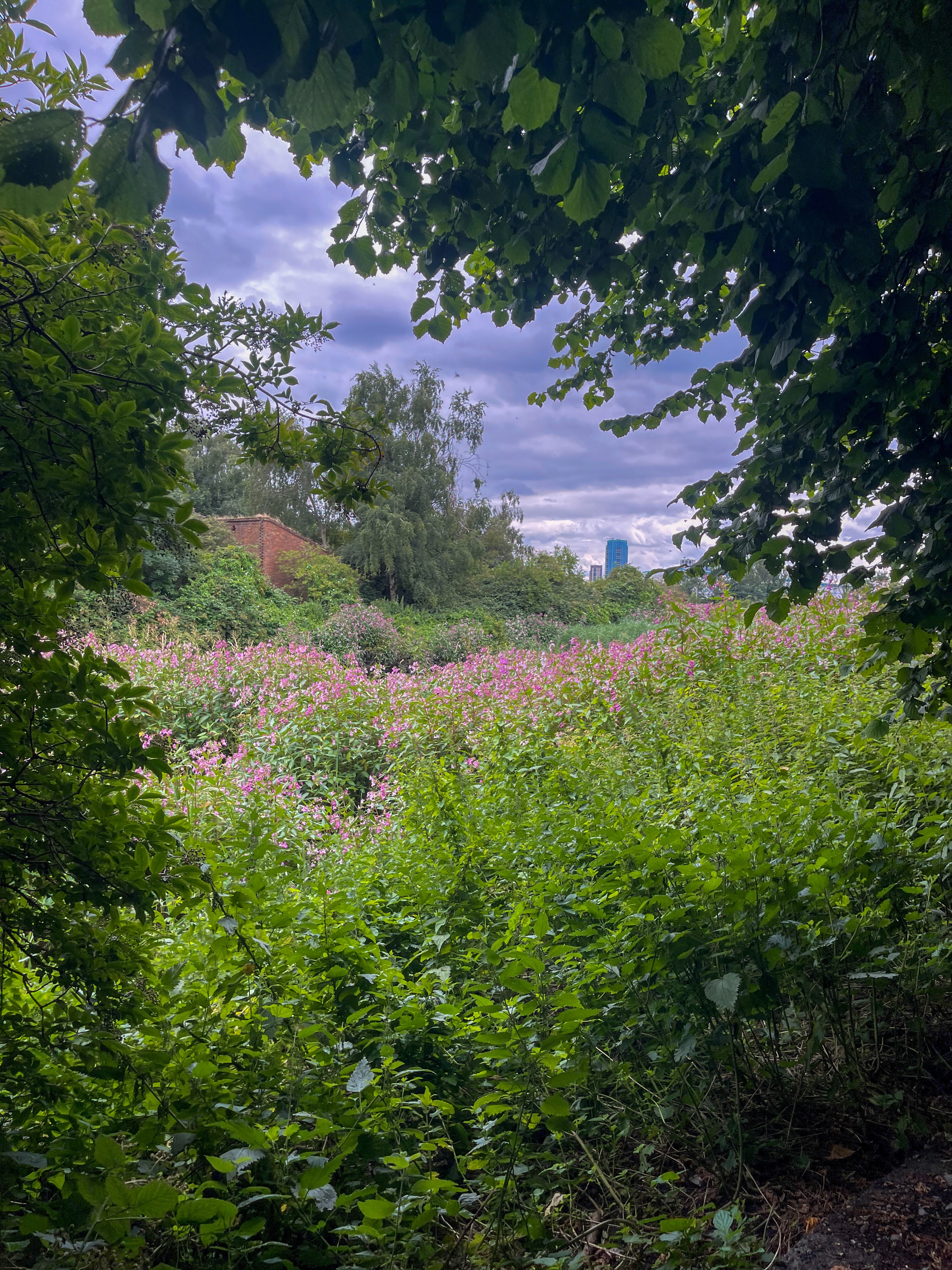
Where wild balsam breathes through tangled air and paths unfurl without promise, Long Wall Ecology Park offers itself not to be captured, but to be felt - raw, fragrant, and resistant to refinement.
I had set out for Long Wall Ecology Park on the 13th of July, 2024, curious to see what this place was about — not to document, just to experience. But the moment I stepped into the site and was met by the scent and soft flush of Himalayan balsam pressing through the air, something shifted. It became clear that this would not be a one-time visit. That first encounter left an imprint.
Since then, I’ve returned often. Sometimes I pass through on the way to other places, sometimes I go with the intent to see what’s changed — but always, to feel. Unlike my other photography trips, I didn’t begin here with a camera in hand. Initially, I used my phone, letting instinct guide the images. Only recently did I begin using my Canon EOS Rebel T3i, but even then, the photos remain largely unedited. There’s something about Long Wall that resists polish. Its beauty lies in its chaos — its messy, fragrant, entangled life — and I choose to honour that by letting the documentation remain raw. Like the space itself, it is altered only by necessity, not design.
And yet, the more I visited, the more I began to notice. Small changes, subtle movements, the quiet transformations of the site across weather and time. With each return, my photographs grew more intentional — not more stylised, but more attentive. I found myself framing with greater care, drawn to textures, fleeting reflections, and passing light. The act of photographing became more than observation — it became a way of acknowledging the space, of honouring the details I had come to recognise and love. The images may remain raw, but they are no longer incidental. They are deliberate offerings: quiet, careful, and full of feeling.
Composition
Where water recedes and silhouettes linger, this space reveals itself in fragments - an ever-braided landscape of motion, memory and wild stillness.
Long Wall Ecology Park is not a singular experience. It is a composite - a layered corridor of movement and stillness braided together with canal banks, narrow paths and pockets of wildness.
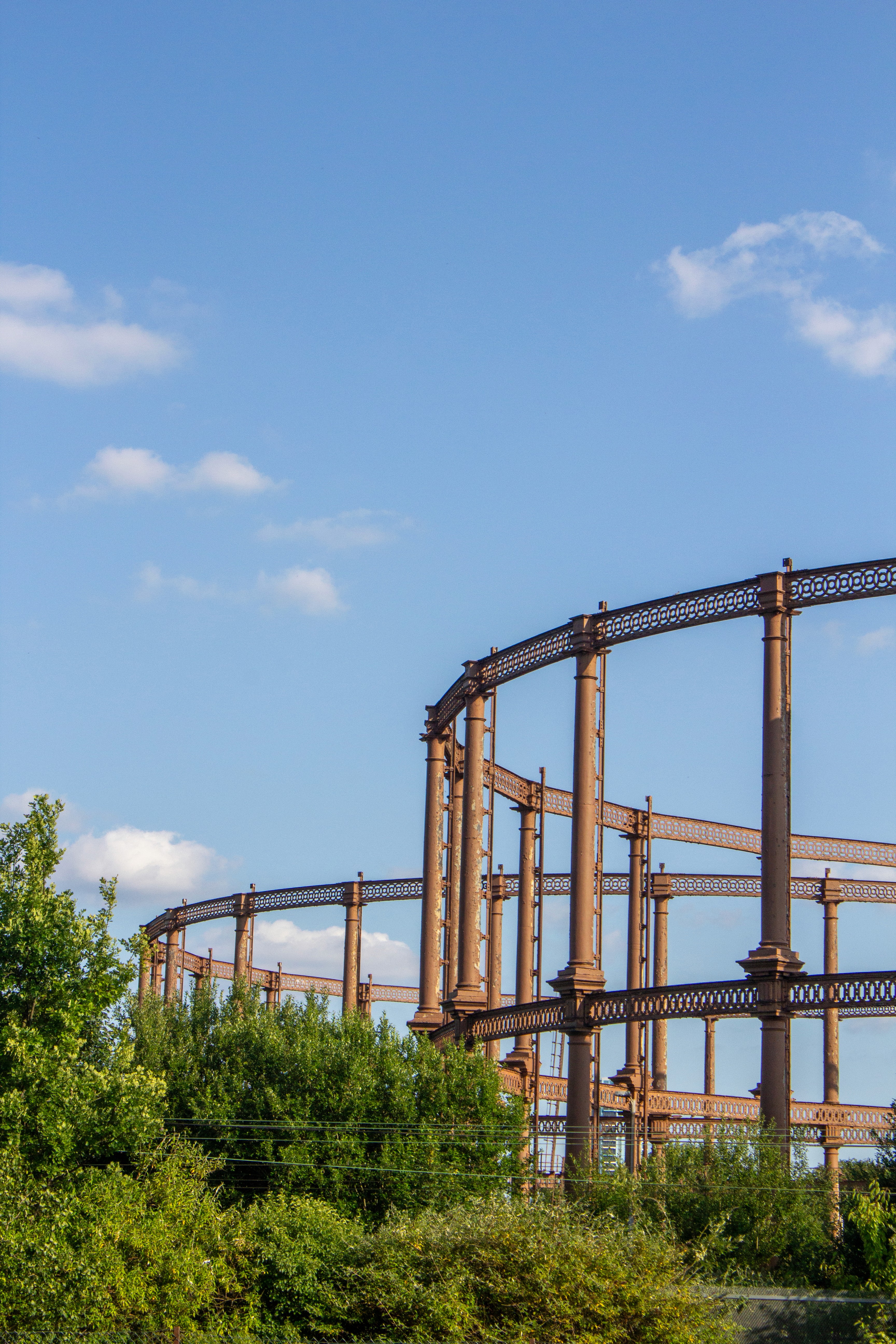
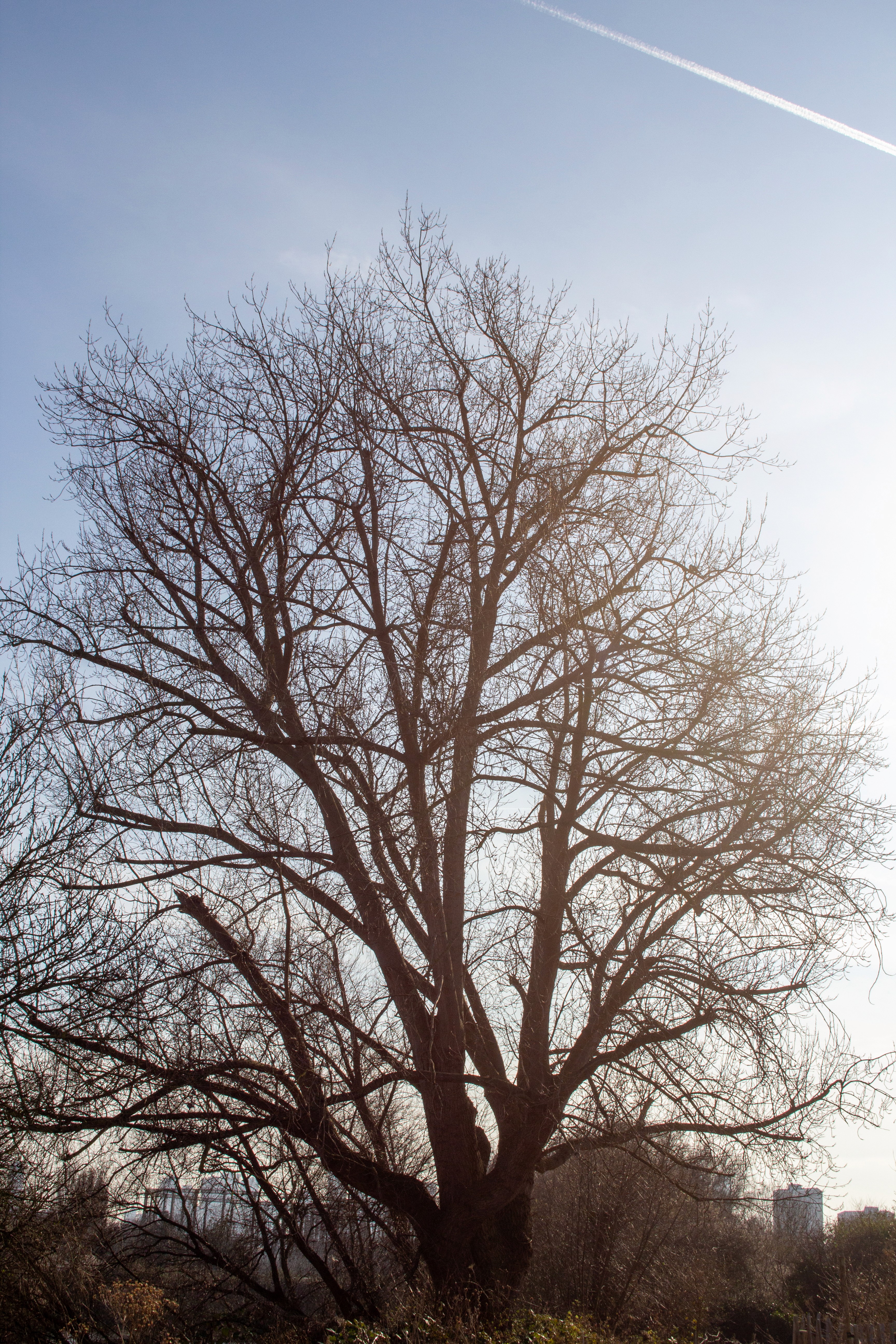
My photographs return to certain motifs with devotion: the reflections across the canal, the rhythmic shadows and silhouettes cast by trees, the long straight path where the Bow Gas Works silhouette rises stoic in the distance. On some visits, I arrive just as the tide recedes at Three Mills Lock, cascading water exposing the layered sediment of time and tide. Occasionally, I spot fish darting between algae and broken sunlight. These images are not arranged as a sequence but rather gathered as encounters: intimate, often solitary, sometimes startling in their sudden beauty.
Experience
Long Wall reshapes itself with each return - where tide and light compose new rhythms, reflections linger across canal water and passing gestures become part of the site’s quiet choreography. Beneath every visit lies a gentle politics of proximity, a negotiation between solitude and shared space, as traces left by paws, tyres and people speak a language of presence. Photography gathers these moments like sediment - not to possess, but to honour. This place remains a tether in motion, a living diary inscribed through repetition, care and the memory of what has passed.
This place is more than its ecology. It’s a hinge between destinations, stitched into my routes throughout the year. As I move between Stratford and Bow, or down toward the River Lea, Limehouse Cut and the Line Art Walk, Long Wall becomes a constant - a green pause embedded in the rhythm of movement.
In my experience of it, Three Mills Green, Three Mills Lock and the Mill House are not separate landmarks but tributaries of the same spatial current. Each visit makes them feel slightly different - dependent on light, season, time of day, or even mood. This malleability makes Long Wall feel like a living diary. It doesn't just sit alongside the water - it becomes water: shifting, reflecting, adapting.
What strikes me about Long Wall is not just its solitude, but the quality of the interactions it permits. On most days, I encounter no one. When I do, it’s usually a cyclist, a fisherman, or a dog walker - but there’s an unspoken choreography that emerges. The path is narrow. We shift gently to pass one another, exchanging a nod or soft “thanks” that acknowledges our brief proximity. These gestures are small but precious. They remind me that even in passing, we co-shape our experiences of a place.
Alongside my own quiet documentation, I’m guided by the subtle remnants of others - footprints both big and small, the paw prints of passing dogs, birds, and other creatures, tyre trails from bikes - all marking the earth in soft conversation. These traces are beautiful in their function: some act as warnings, hinting at the muddiest patches after rain; others gently redirect my gaze, revealing views I might have otherwise missed.
This work, and this place, sit closest to my heart. It is at once a transit route and a tether - one I will continue to visit, so long as it exists.
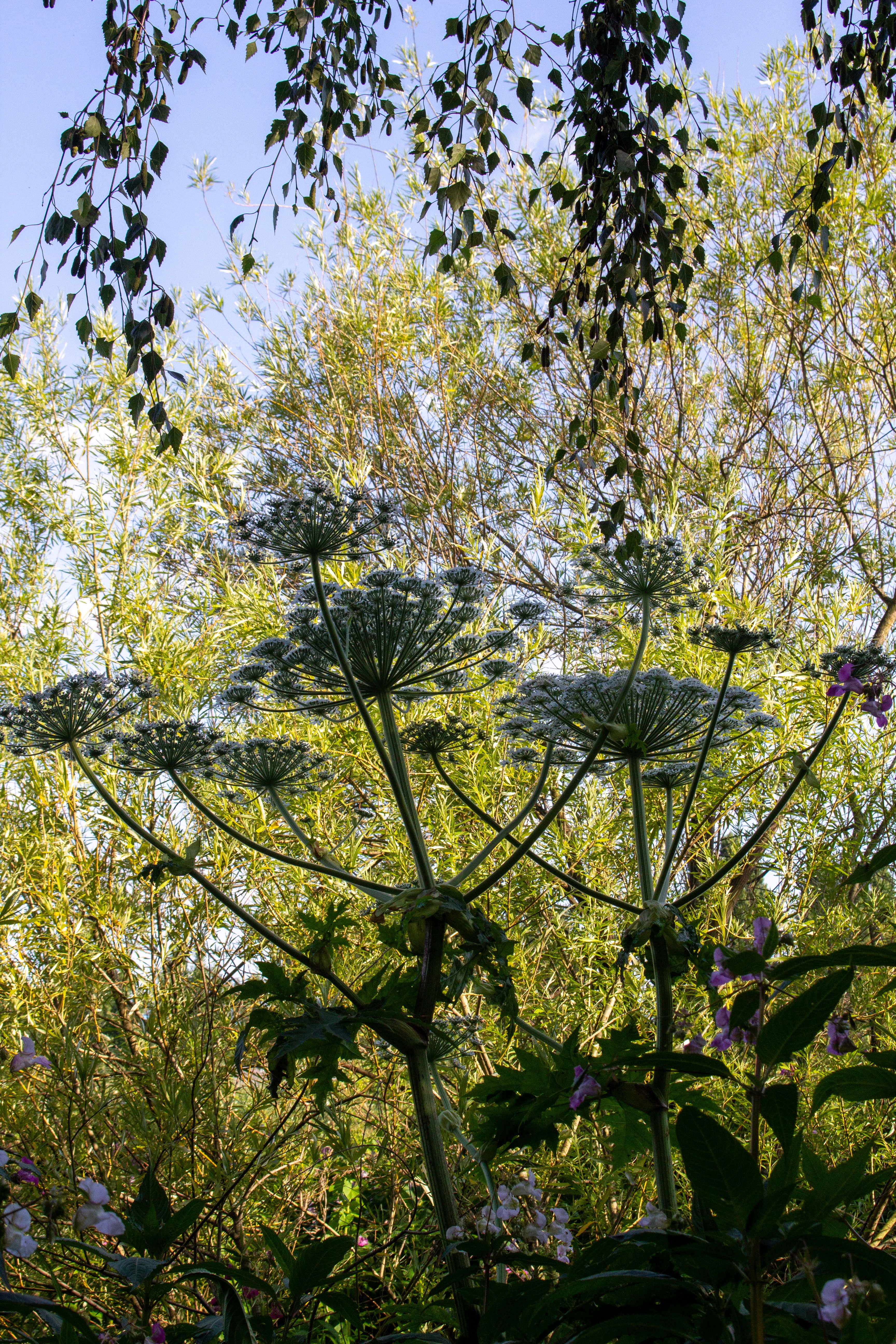
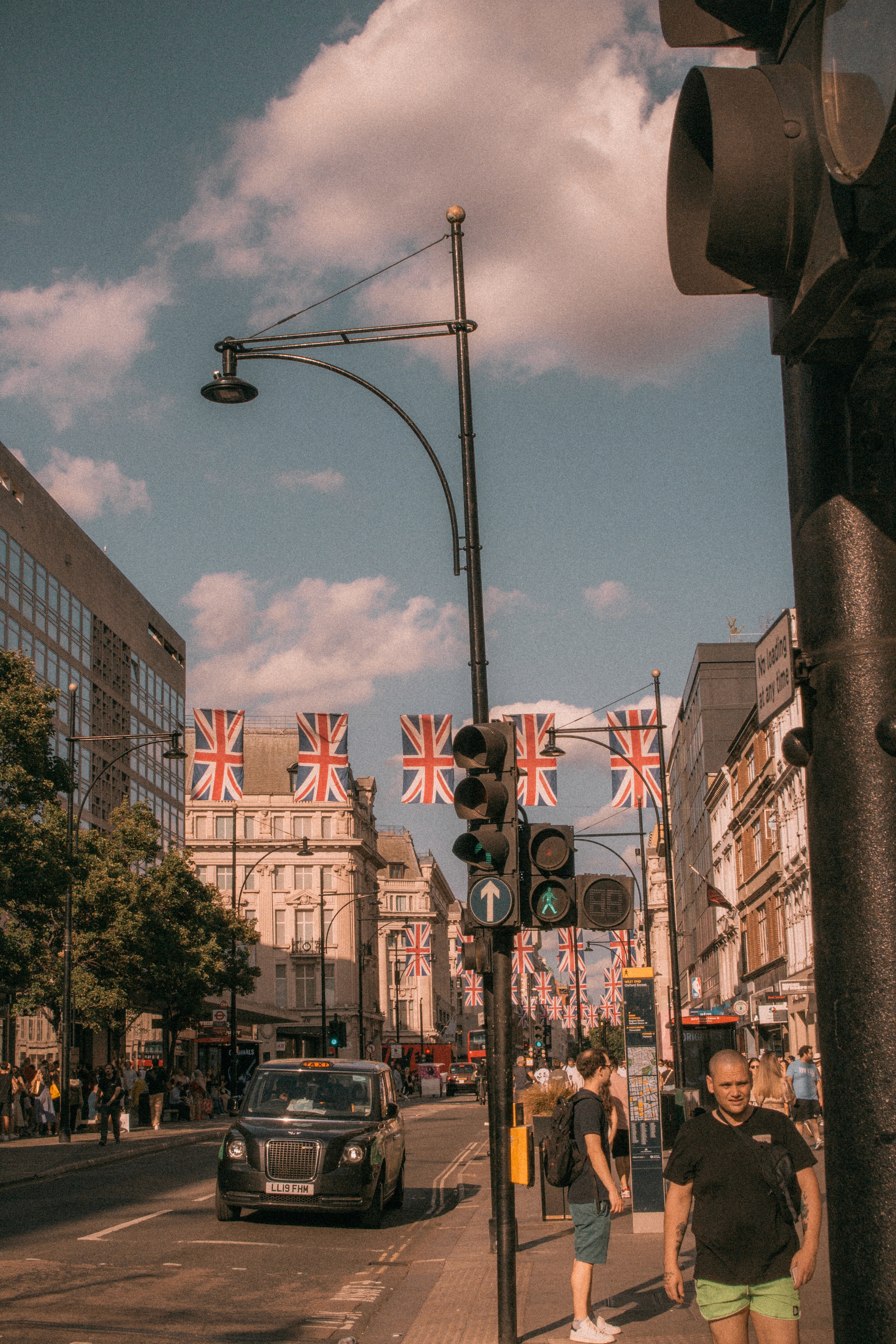
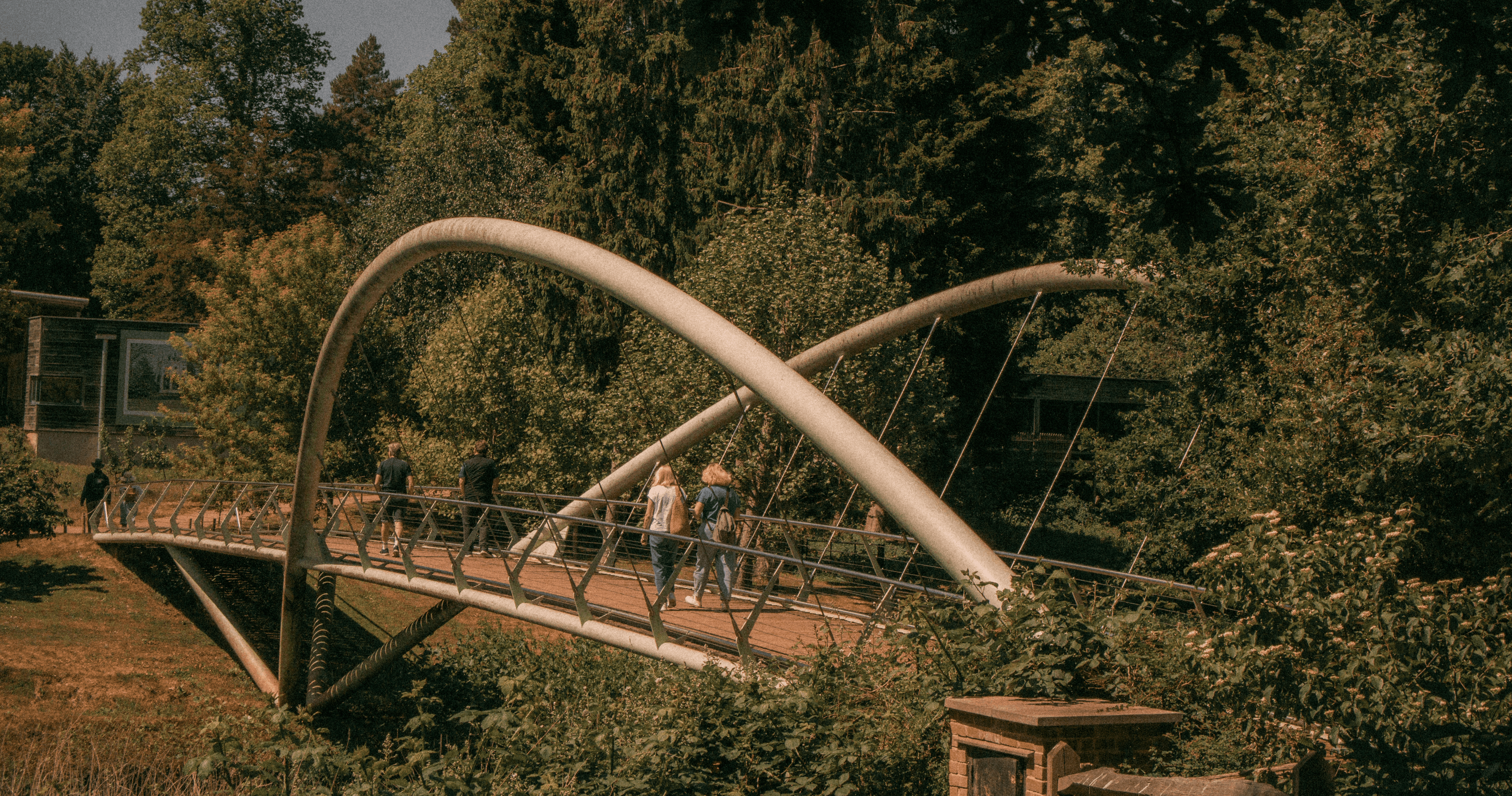
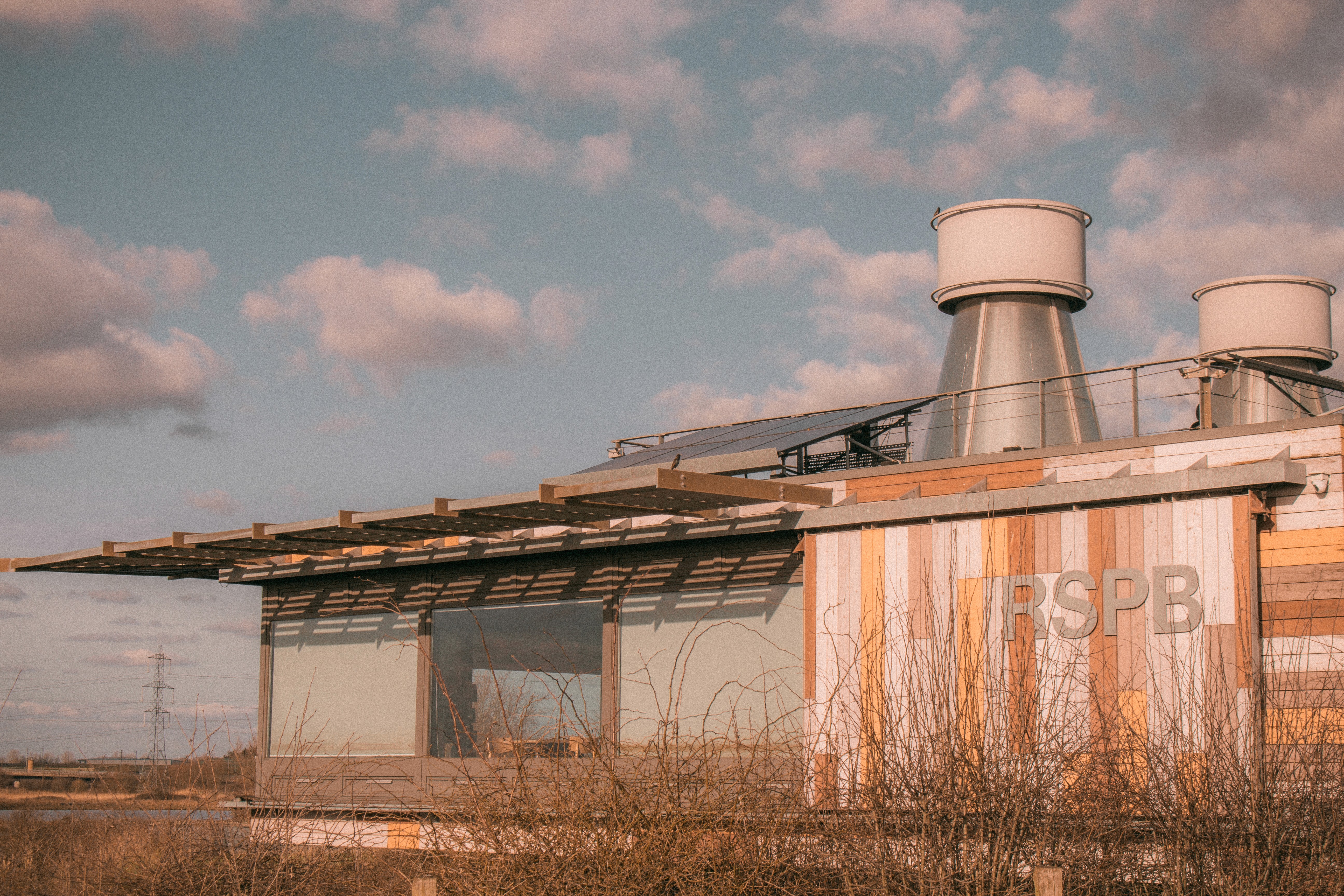
What you will see in this gallery is only a fraction of what was captured - not because the rest was less worthy, but because these are the images that spoke the loudest. Each one has been chosen with care, not as a comprehensive record, but as a reflection of what lingers. They carry the feeling of the place, the way it moved me, the textures and moments that stayed in my hands long after leaving. This is not the whole story, but it is an honest one - fragments that hold the essence.
Jul 13, 2024
Long Wall Ecology Garden
A constant in motion, a pause along the way.
Photography
Community
Where wild balsam breathes through tangled air and paths unfurl without promise, Long Wall Ecology Park offers itself not to be captured, but to be felt - raw, fragrant, and resistant to refinement.
I had set out for Long Wall Ecology Park on the 13th of July, 2024, curious to see what this place was about — not to document, just to experience. But the moment I stepped into the site and was met by the scent and soft flush of Himalayan balsam pressing through the air, something shifted. It became clear that this would not be a one-time visit. That first encounter left an imprint.
Since then, I’ve returned often. Sometimes I pass through on the way to other places, sometimes I go with the intent to see what’s changed — but always, to feel. Unlike my other photography trips, I didn’t begin here with a camera in hand. Initially, I used my phone, letting instinct guide the images. Only recently did I begin using my Canon EOS Rebel T3i, but even then, the photos remain largely unedited. There’s something about Long Wall that resists polish. Its beauty lies in its chaos — its messy, fragrant, entangled life — and I choose to honour that by letting the documentation remain raw. Like the space itself, it is altered only by necessity, not design.
And yet, the more I visited, the more I began to notice. Small changes, subtle movements, the quiet transformations of the site across weather and time. With each return, my photographs grew more intentional — not more stylised, but more attentive. I found myself framing with greater care, drawn to textures, fleeting reflections, and passing light. The act of photographing became more than observation — it became a way of acknowledging the space, of honouring the details I had come to recognise and love. The images may remain raw, but they are no longer incidental. They are deliberate offerings: quiet, careful, and full of feeling.
Composition
Where water recedes and silhouettes linger, this space reveals itself in fragments - an ever-braided landscape of motion, memory and wild stillness.
Long Wall Ecology Park is not a singular experience. It is a composite - a layered corridor of movement and stillness braided together with canal banks, narrow paths and pockets of wildness.
My photographs return to certain motifs with devotion: the reflections across the canal, the rhythmic shadows and silhouettes cast by trees, the long straight path where the Bow Gas Works silhouette rises stoic in the distance. On some visits, I arrive just as the tide recedes at Three Mills Lock, cascading water exposing the layered sediment of time and tide. Occasionally, I spot fish darting between algae and broken sunlight. These images are not arranged as a sequence but rather gathered as encounters: intimate, often solitary, sometimes startling in their sudden beauty.
Experience
Long Wall reshapes itself with each return - where tide and light compose new rhythms, reflections linger across canal water and passing gestures become part of the site’s quiet choreography. Beneath every visit lies a gentle politics of proximity, a negotiation between solitude and shared space, as traces left by paws, tyres and people speak a language of presence. Photography gathers these moments like sediment - not to possess, but to honour. This place remains a tether in motion, a living diary inscribed through repetition, care and the memory of what has passed.
This place is more than its ecology. It’s a hinge between destinations, stitched into my routes throughout the year. As I move between Stratford and Bow, or down toward the River Lea, Limehouse Cut and the Line Art Walk, Long Wall becomes a constant - a green pause embedded in the rhythm of movement.
In my experience of it, Three Mills Green, Three Mills Lock and the Mill House are not separate landmarks but tributaries of the same spatial current. Each visit makes them feel slightly different - dependent on light, season, time of day, or even mood. This malleability makes Long Wall feel like a living diary. It doesn't just sit alongside the water - it becomes water: shifting, reflecting, adapting.
What strikes me about Long Wall is not just its solitude, but the quality of the interactions it permits. On most days, I encounter no one. When I do, it’s usually a cyclist, a fisherman, or a dog walker - but there’s an unspoken choreography that emerges. The path is narrow. We shift gently to pass one another, exchanging a nod or soft “thanks” that acknowledges our brief proximity. These gestures are small but precious. They remind me that even in passing, we co-shape our experiences of a place.
Alongside my own quiet documentation, I’m guided by the subtle remnants of others - footprints both big and small, the paw prints of passing dogs, birds, and other creatures, tyre trails from bikes - all marking the earth in soft conversation. These traces are beautiful in their function: some act as warnings, hinting at the muddiest patches after rain; others gently redirect my gaze, revealing views I might have otherwise missed.
This work, and this place, sit closest to my heart. It is at once a transit route and a tether - one I will continue to visit, so long as it exists.
What you will see in this gallery is only a fraction of what was captured - not because the rest was less worthy, but because these are the images that spoke the loudest. Each one has been chosen with care, not as a comprehensive record, but as a reflection of what lingers. They carry the feeling of the place, the way it moved me, the textures and moments that stayed in my hands long after leaving. This is not the whole story, but it is an honest one - fragments that hold the essence.
Jul 13, 2024
Long Wall Ecology Garden
A constant in motion, a pause along the way.
Photography
Community
Where wild balsam breathes through tangled air and paths unfurl without promise, Long Wall Ecology Park offers itself not to be captured, but to be felt - raw, fragrant, and resistant to refinement.
I had set out for Long Wall Ecology Park on the 13th of July, 2024, curious to see what this place was about — not to document, just to experience. But the moment I stepped into the site and was met by the scent and soft flush of Himalayan balsam pressing through the air, something shifted. It became clear that this would not be a one-time visit. That first encounter left an imprint.
Since then, I’ve returned often. Sometimes I pass through on the way to other places, sometimes I go with the intent to see what’s changed — but always, to feel. Unlike my other photography trips, I didn’t begin here with a camera in hand. Initially, I used my phone, letting instinct guide the images. Only recently did I begin using my Canon EOS Rebel T3i, but even then, the photos remain largely unedited. There’s something about Long Wall that resists polish. Its beauty lies in its chaos — its messy, fragrant, entangled life — and I choose to honour that by letting the documentation remain raw. Like the space itself, it is altered only by necessity, not design.
And yet, the more I visited, the more I began to notice. Small changes, subtle movements, the quiet transformations of the site across weather and time. With each return, my photographs grew more intentional — not more stylised, but more attentive. I found myself framing with greater care, drawn to textures, fleeting reflections, and passing light. The act of photographing became more than observation — it became a way of acknowledging the space, of honouring the details I had come to recognise and love. The images may remain raw, but they are no longer incidental. They are deliberate offerings: quiet, careful, and full of feeling.
Composition
Where water recedes and silhouettes linger, this space reveals itself in fragments - an ever-braided landscape of motion, memory and wild stillness.
Long Wall Ecology Park is not a singular experience. It is a composite - a layered corridor of movement and stillness braided together with canal banks, narrow paths and pockets of wildness.
My photographs return to certain motifs with devotion: the reflections across the canal, the rhythmic shadows and silhouettes cast by trees, the long straight path where the Bow Gas Works silhouette rises stoic in the distance. On some visits, I arrive just as the tide recedes at Three Mills Lock, cascading water exposing the layered sediment of time and tide. Occasionally, I spot fish darting between algae and broken sunlight. These images are not arranged as a sequence but rather gathered as encounters: intimate, often solitary, sometimes startling in their sudden beauty.
Experience
Long Wall reshapes itself with each return - where tide and light compose new rhythms, reflections linger across canal water and passing gestures become part of the site’s quiet choreography. Beneath every visit lies a gentle politics of proximity, a negotiation between solitude and shared space, as traces left by paws, tyres and people speak a language of presence. Photography gathers these moments like sediment - not to possess, but to honour. This place remains a tether in motion, a living diary inscribed through repetition, care and the memory of what has passed.
This place is more than its ecology. It’s a hinge between destinations, stitched into my routes throughout the year. As I move between Stratford and Bow, or down toward the River Lea, Limehouse Cut and the Line Art Walk, Long Wall becomes a constant - a green pause embedded in the rhythm of movement.
In my experience of it, Three Mills Green, Three Mills Lock and the Mill House are not separate landmarks but tributaries of the same spatial current. Each visit makes them feel slightly different - dependent on light, season, time of day, or even mood. This malleability makes Long Wall feel like a living diary. It doesn't just sit alongside the water - it becomes water: shifting, reflecting, adapting.
What strikes me about Long Wall is not just its solitude, but the quality of the interactions it permits. On most days, I encounter no one. When I do, it’s usually a cyclist, a fisherman, or a dog walker - but there’s an unspoken choreography that emerges. The path is narrow. We shift gently to pass one another, exchanging a nod or soft “thanks” that acknowledges our brief proximity. These gestures are small but precious. They remind me that even in passing, we co-shape our experiences of a place.
Alongside my own quiet documentation, I’m guided by the subtle remnants of others - footprints both big and small, the paw prints of passing dogs, birds, and other creatures, tyre trails from bikes - all marking the earth in soft conversation. These traces are beautiful in their function: some act as warnings, hinting at the muddiest patches after rain; others gently redirect my gaze, revealing views I might have otherwise missed.
This work, and this place, sit closest to my heart. It is at once a transit route and a tether - one I will continue to visit, so long as it exists.
What you will see in this gallery is only a fraction of what was captured - not because the rest was less worthy, but because these are the images that spoke the loudest. Each one has been chosen with care, not as a comprehensive record, but as a reflection of what lingers. They carry the feeling of the place, the way it moved me, the textures and moments that stayed in my hands long after leaving. This is not the whole story, but it is an honest one - fragments that hold the essence.
Jul 13, 2024
Long Wall Ecology Garden
A constant in motion, a pause along the way.
Photography
Community
Where wild balsam breathes through tangled air and paths unfurl without promise, Long Wall Ecology Park offers itself not to be captured, but to be felt - raw, fragrant, and resistant to refinement.
I had set out for Long Wall Ecology Park on the 13th of July, 2024, curious to see what this place was about — not to document, just to experience. But the moment I stepped into the site and was met by the scent and soft flush of Himalayan balsam pressing through the air, something shifted. It became clear that this would not be a one-time visit. That first encounter left an imprint.
Since then, I’ve returned often. Sometimes I pass through on the way to other places, sometimes I go with the intent to see what’s changed — but always, to feel. Unlike my other photography trips, I didn’t begin here with a camera in hand. Initially, I used my phone, letting instinct guide the images. Only recently did I begin using my Canon EOS Rebel T3i, but even then, the photos remain largely unedited. There’s something about Long Wall that resists polish. Its beauty lies in its chaos — its messy, fragrant, entangled life — and I choose to honour that by letting the documentation remain raw. Like the space itself, it is altered only by necessity, not design.
And yet, the more I visited, the more I began to notice. Small changes, subtle movements, the quiet transformations of the site across weather and time. With each return, my photographs grew more intentional — not more stylised, but more attentive. I found myself framing with greater care, drawn to textures, fleeting reflections, and passing light. The act of photographing became more than observation — it became a way of acknowledging the space, of honouring the details I had come to recognise and love. The images may remain raw, but they are no longer incidental. They are deliberate offerings: quiet, careful, and full of feeling.
Composition
Where water recedes and silhouettes linger, this space reveals itself in fragments - an ever-braided landscape of motion, memory and wild stillness.
Long Wall Ecology Park is not a singular experience. It is a composite - a layered corridor of movement and stillness braided together with canal banks, narrow paths and pockets of wildness.
My photographs return to certain motifs with devotion: the reflections across the canal, the rhythmic shadows and silhouettes cast by trees, the long straight path where the Bow Gas Works silhouette rises stoic in the distance. On some visits, I arrive just as the tide recedes at Three Mills Lock, cascading water exposing the layered sediment of time and tide. Occasionally, I spot fish darting between algae and broken sunlight. These images are not arranged as a sequence but rather gathered as encounters: intimate, often solitary, sometimes startling in their sudden beauty.
Experience
Long Wall reshapes itself with each return - where tide and light compose new rhythms, reflections linger across canal water and passing gestures become part of the site’s quiet choreography. Beneath every visit lies a gentle politics of proximity, a negotiation between solitude and shared space, as traces left by paws, tyres and people speak a language of presence. Photography gathers these moments like sediment - not to possess, but to honour. This place remains a tether in motion, a living diary inscribed through repetition, care and the memory of what has passed.
This place is more than its ecology. It’s a hinge between destinations, stitched into my routes throughout the year. As I move between Stratford and Bow, or down toward the River Lea, Limehouse Cut and the Line Art Walk, Long Wall becomes a constant - a green pause embedded in the rhythm of movement.
In my experience of it, Three Mills Green, Three Mills Lock and the Mill House are not separate landmarks but tributaries of the same spatial current. Each visit makes them feel slightly different - dependent on light, season, time of day, or even mood. This malleability makes Long Wall feel like a living diary. It doesn't just sit alongside the water - it becomes water: shifting, reflecting, adapting.
What strikes me about Long Wall is not just its solitude, but the quality of the interactions it permits. On most days, I encounter no one. When I do, it’s usually a cyclist, a fisherman, or a dog walker - but there’s an unspoken choreography that emerges. The path is narrow. We shift gently to pass one another, exchanging a nod or soft “thanks” that acknowledges our brief proximity. These gestures are small but precious. They remind me that even in passing, we co-shape our experiences of a place.
Alongside my own quiet documentation, I’m guided by the subtle remnants of others - footprints both big and small, the paw prints of passing dogs, birds, and other creatures, tyre trails from bikes - all marking the earth in soft conversation. These traces are beautiful in their function: some act as warnings, hinting at the muddiest patches after rain; others gently redirect my gaze, revealing views I might have otherwise missed.
This work, and this place, sit closest to my heart. It is at once a transit route and a tether - one I will continue to visit, so long as it exists.
What you will see in this gallery is only a fraction of what was captured - not because the rest was less worthy, but because these are the images that spoke the loudest. Each one has been chosen with care, not as a comprehensive record, but as a reflection of what lingers. They carry the feeling of the place, the way it moved me, the textures and moments that stayed in my hands long after leaving. This is not the whole story, but it is an honest one - fragments that hold the essence.