Jan 13, 2026
Attentive Magnetism
Dissertation
Outline
Abstract
Urban landscapes are complex, multisensory and more-than-human environments that demand methods of inquiry grounded in embodied presence, rather than distanced or purely representational modes of observation.
This dissertation develops and tests Attentive Magnetism, a field-based methodology I designed to expand ecological perception and ethical awareness by cultivating relational, iterative and situated forms of engagement. Drawing on posthuman and phenomenological theory, the method positions the fieldworker as an actant within an entangled ecological field, where attention unfolds through movement, repetition, sensory openness and reciprocal encounter.
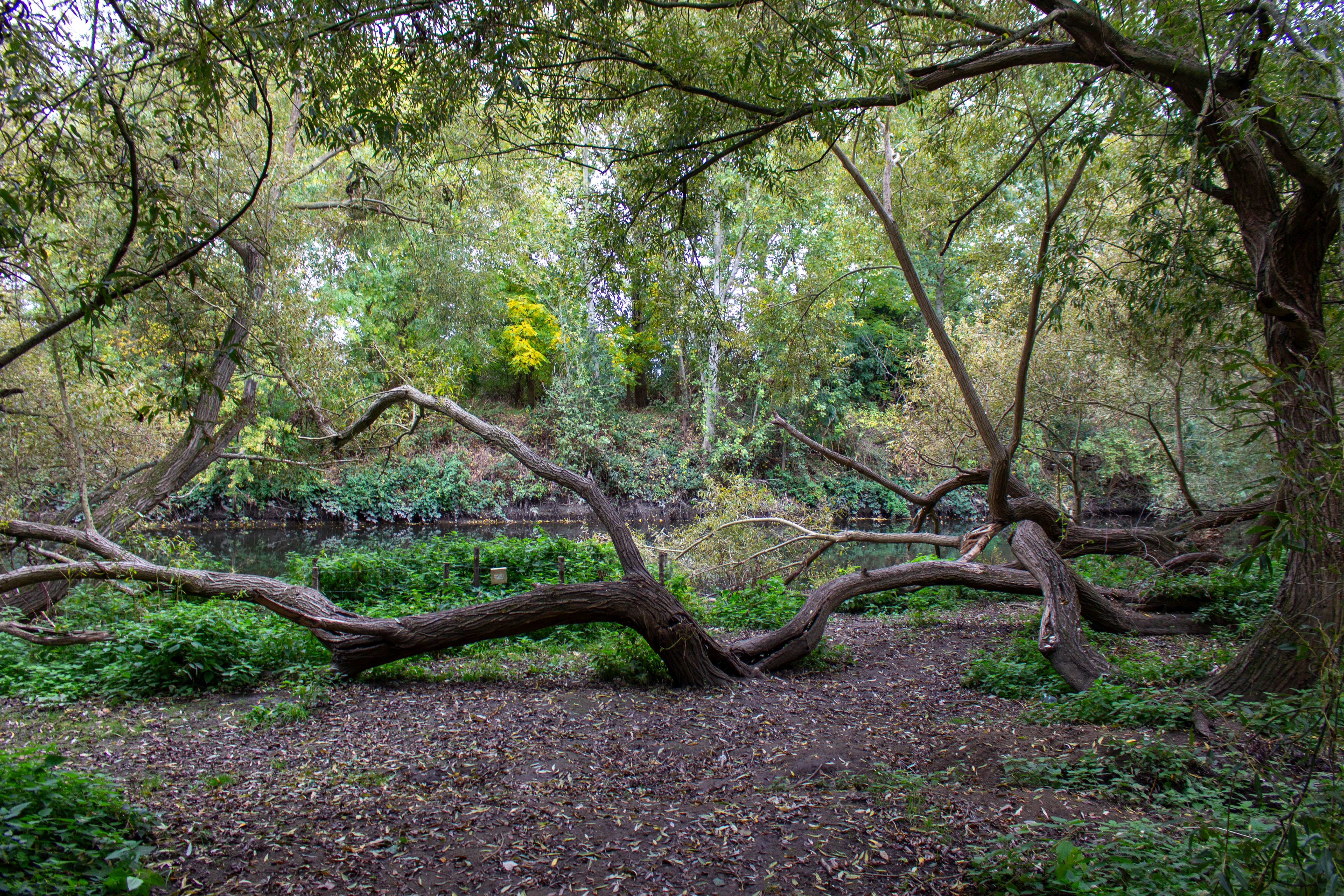
The methodology was applied through a dual practice-based study comprising a researcher-led investigation and a participant-led engagement. Perceptual, sensory and emotional responses offered parallel yet distinct readings of two London sites: Hackney Marshes and Hollow Pond/Leyton Flats. Across these visits, Attentive Magnetism proved accessible and adaptable, requiring no specialist knowledge and accommodating differences in pace, orientation and perceptual style. While my own fieldwork foregrounded multispecies rhythms, atmospheric thresholds and moments of emotional intensity, participant engagement centred on material detail, soundscapes and human traces.
Despite these contrasts, both trajectories produced deepened ecological awareness, demonstrating that the method supports diverse modes of attunement while maintaining conceptual coherence.
Attentive Magnetism fosters immersion by slowing perception and enabling participants to register subtle shifts in more-than-human activity, environmental conditions and social patterns. It supports ethical awareness by encouraging the recognition of landscapes as responsive, co-constituted systems rather than passive objects of study. Challenges related to environmental variability, affective thresholds and documentation highlights areas for refinement but also emphasise the method’s sensitivity to embodied experience.
The study concludes that Attentive Magnetism offers a robust and inclusive framework for landscape practice, pedagogy and experiential research. It provides a means of engaging with urban landscapes through care, attentiveness and reciprocity and demonstrates that ecological understanding emerges not through technical mastery but through the willingness to move with, listen to and be changed by the landscape. In doing so, it contributes a methodological approach capable of supporting more ethical, reflective and multispecies-aware landscape futures.